
The parent of a curious, talented, and hardworking young ballet student asked me recently what resources I recommend for dancers to learn more about topics such as Anatomy, Kinesiology, Movement Science, and Injury-Prevention. They had noticed some of my articles on Movement Analysis and Sustainable, Mindful Movement and wanted to see what further tools I might know of.
Learning our own bodies and these forms is a lifelong process and the resources and tools are growing all the time. I am committed to doing what I can to continue to improve in my teaching artistry, dance education and coaching work to promote joy, mindful movement, self-awareness, respect, nourishment, sense of self-worth, and appreciation for the whole range of human embodiment.
Always interested in inspiring ways to keep the growth going, this is in no way a comprehensive or complete list, but I hope it spurs further exploration for you!
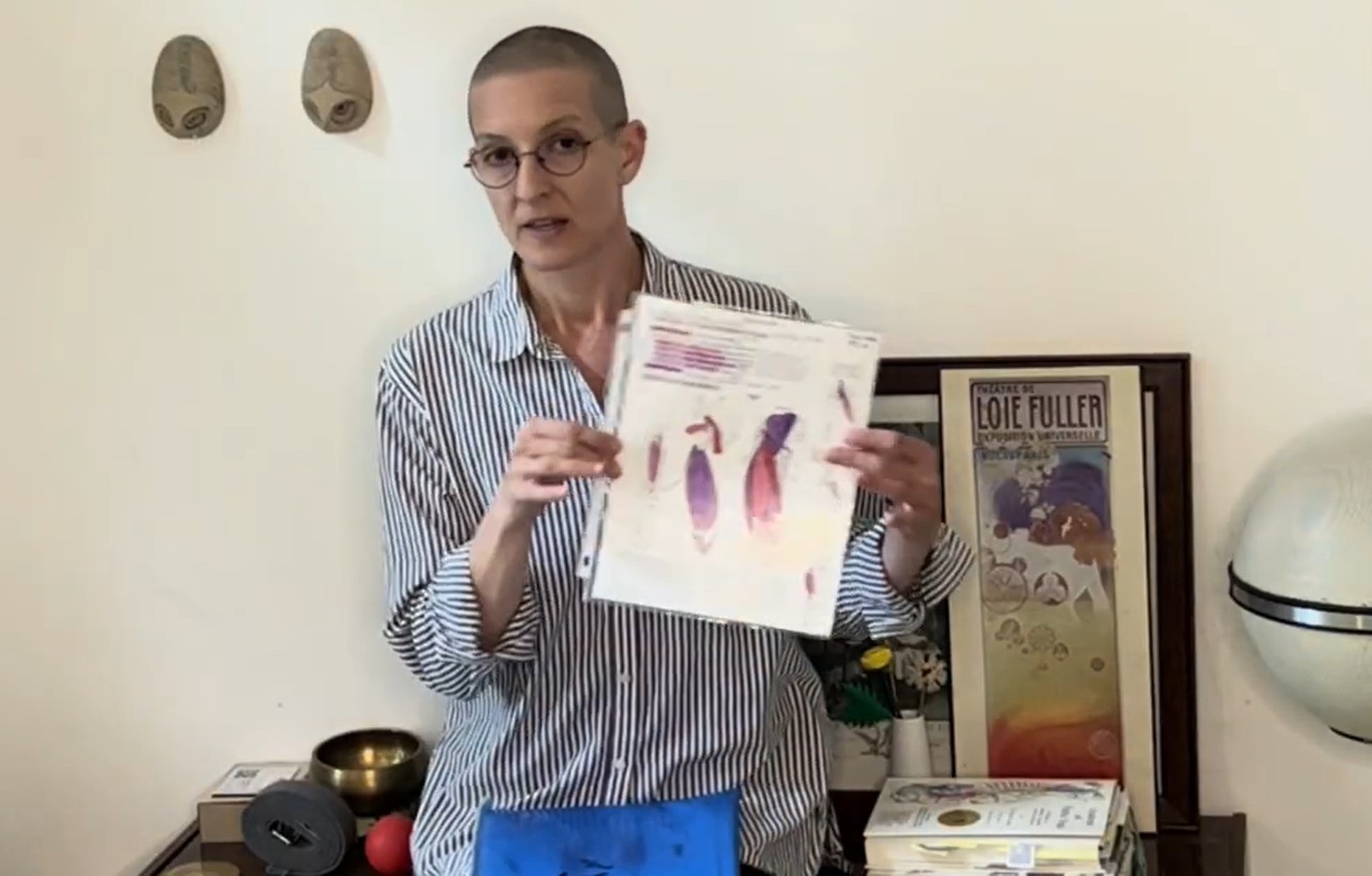
Anatomy Resources Video
My Perspective
It’s important to stress that I am not a physician or medical practitioner of any kind, just a Teaching Artist and Dance Educator fascinated by human movement, wanting to practice ballet, yoga, and other modalities in as safe and sustainable a way as possible, for myself and for my students and clients.
Alongside my public school education in Hawai’i, I participated in pre-professional ballet and dance training from the age of 5, going on to conservatory education at North Carolina School of the Arts, performance on the continental US, Hawai’i, and Europe, an MFA in Dance Performance & Choreography from the University of Hawai’i at Manoa, leadership in the Performing Arts as the President of the Dance Coalition of Oregon, conferences such as Festival a Corps and the SIBMAS Symposium and collaborations with a variety of artists in dance and diverse media.
Given my vision and mission, this will continue to be an area of research, contemplation, discussion, and experimentation as I continue in the field, and I look forward to engaging with you about it too, here in the online space and in person.
Books
- The Anatomy Coloring Book from designer and illustrator Wynn Kapit was an important supplementary text for my Anatomy & Kinesiology for Dance course with Gregg Lizenberry at UHM that I refer to the most, a great tool for context where I have no internet access (or where I want no distractions) and wish to illustrate a concept.
- If you’re interested in similar titles, I also came across this List of Anatomy & Physiology Coloring Books from nursetheory.com to compare and contrast.
- A good general text at the time I was studying for my MFA and now available on archive.org, Dance Anatomy & Kinesiology by Karen Clippinger was ultimately too large and heavy to become a long-term reference for me, so I gave my hard copy to a colleague, though it is available now in digital form.
- Dance Anatomy by Jacqui Greene Haas I also found useful at the time in studying movement mechanics, but didn’t need to keep the physical copy in my collection.
- Yoga Anatomie 3D by Ray Long, for which the German edition was used in my YTT200 with yogaloft here in Cologne, but is available in other languages and has wonderful illustrations of the essential information, is concise and evocative.
- Anatomy of Hatha Yoga : A Manual for Students, Teachers, and Practitioners by H. David Coulter I had purchased the 2021 original years ago when first getting serious about studying yoga, but found the in-depth medical science-based analysis and images to be of lasting value and worth bringing this brick of a text on multiple moves. There is now a 2012 edition available as well.
- Making Connections: Total Body Integration Through Bartenieff Fundamentals by Peggy Hackney is a bit difficult to navigate at first as a text, but has been one that I turn to again and again, full of page markers, flags, and annotations. I also found the Hackney’s 1989 VHS, Discovering your expressive body: Basic concepts in dance training utilizing Bartenieff fundamentals, but only had access to it at the UHM Library.
- The Thinking Body: A Study of the Balancing Forces of Dynamic Man by Mabel Ellsworth Todd was originally recommended to me during my MFA study by professor Betsy Fisher, but is on my current physical TBR. When I looked it up for this article, I found that it is also available as a pdf on archive.org
Podcast & YouTube Channels
- Jenni Rawlings, Yoga & Movement Science YouTube channel and podcast provide research-backed information on movement in yoga, sport, and everyday applications
- Bonnie Bainbridge Cohen‘s @BodyMindCentering provides deep experiences in movement fundamentals and dynamic posture
Apps
Unfortunately I do not recall (and am not finding in my notes) which application was used during my Yoga Teacher Training, but it was neat to be able to take a look around the movements of the muscles and different body parts in an interactive way.
The Muscle & Motion App has good ratings on the iTunes store and I’m interested to explore it’s 3D interactivity, but unfortunately access is available through a subscription model. If you have any recommendations in this area, I’d love to hear them!

Questions for Reflection
- What are your favorite tools for studying anatomy & movement?
- How do you learn new concepts to apply to your dancing?
- Where do you keep resources for easy reference?
- How can I support your dancing & creative journey?
Resources for Further Exploration
- Stability & Aplomb: Integrity in Action article
- The Body in Space – anatomical dimensions, planes, and posture in dance & life article
- Sourcing Ballet Somatically – Pedagogical Approaches to Integrating Movement Techniques article and the works cited therein
- Truths About Turnout article
- Rollercoaster of Dance: Traveling Through Undercurve & Overcurve Pathways article
- Building a Healthy Relationship with Body, Food & Eating article
- Tasty Technique Tips playlist on YouTube has a growing collection of bite-sized technique and physiology tidbits
Thank you for reading, for being, and for dancing with me, in spirit or in fact!
Take care of yourself and keep moving mindfully, let me know how if I can be of service, would love to see you in my email newsletter or on social media as well.
Blythe Stephens, MFA & Bliss Catalyst they/she
Creator of A Blythe Coach @ablythecoach
dancing through difficulty
taking leaps of faith