A Blythe Coach

Seeking Sweet Sleep: Yogic Insomnia Solutions

I’ve been listening to the Audiobook version of Eat, Pray, Love recently (I know, finally!) and Elizabeth Gilbert puts a fine point on the importance of sleep in our lives, divulging that during a particularly difficult part of her life following divorce she was treated for depression, including her last resort of taking medication: “I could finally sleep. This was the real gift, because when you cannot sleep, you cannot get yourself out of the ditch, there’s not a chance.” (Chapter 17)

What fosters good sleep in your life? What rituals help you wind down and relax in order to fall asleep and rest peacefully? That’s what I’m exploring today on the blog and in episode 53 of the A Blythe Coach Podcast:

Now, I am not a medical doctor or expert, just here to share what works for me and recommendations from friends and professionals. If you struggle with insomnia, definitely consult with a trusted doctor to treat the cause of your symptoms. 

Overall, I have been really fortunate my whole life, generally being able to fall asleep easily and sleep deeply and for long periods. When I am awake, I am usually full of energy, but at the end of the day I can relatively quickly unwind and pass out soon after my head hits the pillow. However, there have been times when I haven’t gotten all the sleep that I want or need.

When I’m super-excited about something the following day such as a performance, interview, audition, test or professional evaluation, new class of students and so forth, I often find it difficult to fall asleep. I have had seasons in my life with poorer sleep than others, including periods of drastic change such as major breakups/divorce, while working in stressful jobs, at certain times in my educational journey, and while grieving loss. In these cases, I may not have as much time to sleep overall, I may not fall asleep as quickly as usual, my sleep can be fitful, and I also tend to wake up extra early when anxious and stressed.

I understand that many people I love live with mental or physical conditions that preclude good sleep on a regular basis and I feel deep compassion towards those who suffer from insomnia and lack of sleep regularly.

Some reasons we lose sleep are joyful: an exciting new job, move, new baby, or other wanted changes. But the body can’t tell the difference between “good” excitement or anxiety and “bad.” thus we need to cultivate practices that help relax both body and mind, regardless of the source of stress. I’m grateful that thus far, insomnia has not become a chronic condition for me, but I want to serve my students and clients who struggle in this area.

I am fortunate to be able to control to a great degree the conditions of my sleep: where, when, and how much. When they do come, my own anxious evenings are made easier with the knowledge that I CAN get by on little sleep for a while, especially since I am a good napper and am able to catch a few winks in between. This is a skill I highly recommend developing, the ability to somewhat catch up on rest through micro-naps or short periods of sleep (sometimes not complete sleep, but at least full-body relaxation, which can be very refreshing) during the day. I have been known to steal a lunchtime snooze under my desk or whatever relatively dark and peaceful location is available in professional and academic settings! 

What I have discovered does NOT help me sleep better is continuing to lay in bed on a night when I am struggling to drift off, obsessing over what time I need to rise the next day, what I will need to accomplish then, or how difficult that will be unrested.

Adequate sleep is required for us to function on a basic level, let alone access our higher faculties to learn and grow. Of course it is especially critical for dancers and other athletes to get enough rest and recovery, as fatigue can lead to injury.

We all know that sleep is an essential life requirement, but we tend to forget the ingredients we require to set ourselves up to fulfill this basic need. This is a highly personal area, but some places to look if you’d like to make some tweaks to improve your sleep are environmental factors, yoga, relaxation, visualization and meditation, Ayurveda, the timing of yoga and exercise, and other soothing rituals like bathing, writing, reading, music, baths, warm drinks, & herbal remedies.

These are all practices I have employed and enjoyed at one point or another as gateways to sweet sleep. 

Ayurveda to Promote Sleep

In this post, I am referencing The Woman’s Book of Yoga & Health by Linda Sparrowe and with yoga sequences by Patricia Walden, but their advice on insomnia and sleep is relevant for all, regardless of sex or gender. Sparrowe outlines some natural Ayurvedic insomnia solutions, “Of course, nothing will make your insomnia go away unless you change your lifestyle and decrease your stress level. Ayurvedic physicians remind us that we can make a few very simple changes to lessen our stress and promote a good night’s sleep:

  • Go to bed at the same time each night (preferably by 10:00 PM) and get up early (by 6:00 AM, if possible).
  • Avoid stimulating activities just before bed.
  • Unless it triggers night sweats, take a warm bath scented with sleep-inducing aromatherapy–try lavender essential oil–to promote sleep.
  • Exercise early in the day–aerobic activity like walking or jogging, energizing yoga sequences, and pranayama practice.
  • Set aside some ‘worry time’ so you can clear your mind before bedtime.
  • Drink warm milk/soymilk seasoned with honey and cardamom to calm and relax your nerves.” (p.243)

Relaxing Bedtime Yoga Poses

Linda Sparrowe explains how yoga can help us get better sleep: “A daily yoga practice that combines active standing poses and back-bends with more restorative poses first tires you out and then calms your nerves, quiets your mind, and relaxes your body.” (The Woman’s Book of Yoga and Health p.243) Specific yoga poses that Patricia Walden recommends to relieve insomnia include: Reclining Bound Angle, Downward Facing Dog, Standing Forward Bend, Headstand, Shoulderstand, Half-Plough Pose, Bridge Pose, Easy Seated Forward Bend, and Corpse Pose. (The Woman’s Book of Yoga & Health p.260-2)

Reclining Bound Angle Pose / Supta Baddha Konasana : “This pose improves circulation in your abdomen, helping to calm your nerves.” (p.260)

Downward Facing Dog / Adho Mukha Svanasana : “This pose relaxes your nervous system, relieving anxiety and tension.” (p.260)

Standing Forward Bend / Uttanasana : “By soothing your sympathetic nervous system and easing tension, this pose can help combat insomnia.” (p.260)

Headstand & Shoulderstand, Half-Plough / Sirasana, Sarvanasana, Ardha Halasana : Walden cautions, “Do [these poses] only if it is already part of your yoga practice. Do not do this pose if you have high blood pressure, have your period, or suffer from neck or back problems or migraines.” (p.261) The benefits of Headstand are to “help balance your endocrine system and relieve insomnia and nervous energy,” and Shoulder stands “soothe your nervous system and is especially useful in fighting insomnia, emotional distress, and irritability.” Walden says of Half-Plough Pose, “Try this pose to help bring a sense of calm and clarity to your mind and body, balance your energy, and relieve anxiety.” (p.261)

Bridge Pose / Setu Bandha Sarvangasana : “This pose can help calm nervousness and relieve anxiety to help you sleep.” (p.262)

Easy Seated Forward Bend / Adho Mukha Sukhasana : “This restful pose helps calm your nerves and prepare body and mind for sleep.” (p.262)

Corpse Pose / Savasana : “Relaxing, nourishing, and calming, this pose helps prepare your mind and body for restful sleep.” (The Woman’s Book of Yoga & Health p.262)

In general, gentle inversions, restorative forward folds, heart-openers, hip-openers, and twists are used in yoga practices for unwinding, relaxing, and preparing for bed. Keep in mind that if you are experiencing depression, extended time spent in inward-going forward folds is not recommended, choose other relaxing poses such as hip stretches and gentle back bends in this case.

I particularly enjoy easy neck and shoulder stretches, hip stretches like Half-Pigeon, and inversions like Downward Dog, Legs-Up-the-Wall, Candlestick, & Plough, and long unwinding twists to prepare to recline, release the day, and sleep, and have included some of these in this week’s new video below:

The Yoga for Sweet Sleep / Insomnia Solutions practice video is on YouTube

Relaxing Bedtime + Wind-Down Yoga Practices

I have a host of relaxing existing yoga flows on my YouTube Channel, which I plan to continue to expand upon going forward, including:

I also enjoy the many bedtime/relaxing practices from Yoga with Adriene in English and from Mady Morrison in German. 

Relaxation, Visualization, & Meditation

In her lifestyle primer Three Black Skirts, Anna Johnson recommends a simple before-bed relaxation ritual: “Do a ten-minute deep-relaxation exercise before sleep: Lie flat on the mattress, breathing slowly and deeply in and out of your nostrils. Starting with your feet, tighten then release each muscle in the body–the legs, torso, arms, shoulders, etc. Feel your body growing heavier and heavier, sinking deeper into the mattress.” (p.10)

This is a nice simple practice that anyone can try, and is related to other approaches to deep relaxation, including Yoga Nidra to follow.

Visualization is helps many people to find a relaxed state as well, and is an element of Yoga Nidra, or can be practiced separately. Along those lines, Johnson suggests: “Concoct a dream before sleep. Visualize the landscape, characters, and colors. Drifting deep into the imagination may open the door to real dreaming.” (Three Black Skirts p.10)

Yoga Nidra for deep relaxation
Yoga Nidra – Deep Relaxation Practice” YouTube Video

Yoga Nidra can be a great way to relax before bed or anytime. It is a wonderful extended deep relaxation process that includes breath awareness, body-scanning, and visualization techniques.

Pranayama Breathing to Unwind 

Although The Women’s Book of Yoga and Health advises that pranayama practices are best performed earlier in the day, for myself personally, I can find slow and relaxed breathing exercises helpful to allow thoughts and worries to slip away. Only practice pranayama if it is appropriate for you, and listen to what your body wants in order to relax.

A few breath and mantra practices that I personally find decompressing are silently or out loud repeating the “Om” Mantra, Alternate Nostril Breathing, Humming Bee Breath, and Lion’s Breath.

Om Mantra for articulation and relaxation
Om/Aum tutorial video
Nadi Shodhana /Alternate Nostril Breathing for balanced energy (00:00-8:35)

Alternate Nostril Breath (Anuloma Viloma or Nadi Shodhana)

According to The Yoga Deck, alternate-nostril breathing helps balance the energy of the nervous system and has “a profound stilling effect on the mind.” There are many approaches to alternate-nostril breathing, including hand positions, timing etc. I personally prefer to elongate, but not count the time spent inhaling and exhaling (known as a ration), and also to not necessarily retain the breath in-between, as shown in the video above.

Alternatively, here are the instructions given by Olivia H. Miller with Katherine Trainor, Yoga Consultant in The Yoga Deck: 50 Poses and Meditations for Body, Mind & Spirit:

  • “Sit comfortably. Place the index and middle fingers of the right hand on the forehead; thumb rests on right nostril, ring and baby fingers rest on left nostril.
  • Inhale and exhale. Close right nostril with the thumb; inhale through left nostril for a count of 5.
  • Close both nostrils; hold your breath for a count of 5.
  • Lift the thumb; exhale for a count of 5 through right nostril.
  • Inhale through right nostril; hold for a count of 5. Close right nostril, and exhale through left nostril. This ends 1 round.
  • Repeat 4 more rounds.” (The Yoga Deck)

You may choose to accompany the breathing practice with affirmations, such as: “I am balanced, calm, and serene,” or “I am wrapped in a warm blanket of serenity.” (The Yoga Deck)

“NOTE: We breathe in two-hour cycles: first one, then the other nostril is dominant. Prolonged breathing through one side saps our energy. Anuloma Viloma restores the proper balance.” (The Yoga Deck)

Brahmari / Humming Bee Breath for relaxation & contentment

Humming Bee Breath (Brahmari), according to The Yoga Deck, has “a calming influence on the mind. Grounds you in the present moment.” 

  • “Sit comfortably with spine erect.
  • Close or lower your eyes. Inhale deeply for a count of 7.
  • With lips parted slightly, hum as you exhale for a count of 14. Get your lips to vibrate as you exhale.
  • Repeat 2 more times.”

I also received instructions during my yoga teacher training for Brahmari, which specified, “Inhale slowly and deeply through the nose. On exhalation make the sound of ‘m’ as in the third letter of ‘aum,’ like the humming sound of a bee. Exhale slowly and do not strain. The sound should be smooth, even, and controlled. The exhalation will naturally be longer than the inhalation. Continue. If that is comfortable, block the ears with the fingers to increase the vibrations through the body [you will see me do this in the video above].”

Simhasana / Lion’s Breath for letting it all go (7:17+)
“Autumn Release Lion’s Breath Yoga” on YouTube

Lion’s breath is a great way to howl, yowl, or hiss your tension away. It might feel silly to new practitioners, but can have a wonderfully relaxing effect as you get to physically blow off steam. After inhaling, just open your mouth wide, stick your tongue out and down toward your chin, allowing the eyes to roll up toward the third eye, widening and engaging the whole face as your exhale strongly and roar like a fierce lion. Repeat as desired.

Improve Your Environment

In Coach Yourself to Success, life coach Talane Miedaner emphasizes, “You want your home to rejuvenate you so that you have the energy to go to work again the next day. The first place to start is your bedroom. Make this room a haven, a place to retreat and relax. If you have a TV in the bedroom, move it out to another room; you’ll sleep better.” (p.200)

Anna Johnson warns to “Distance yourself from alarm clocks or other objects that glow in the dark, and make you fret about the lateness of the hour or the responsibilities of the next day.” (Three Black Skirts p.10)

I have used ear plugs and even a sleep mask to help me drift off in certain circumstances. Even if we sometimes can’t control our larger environment (housing, bedroom, roommates, mattress condition, and so forth), we can still take steps to prepare ourselves internally and in our immediate surroundings to help help us sleep better.

This may include adjustments to furnishings like our mattress, pillow, blankets, curtains (light), etc., but also things like aromatherapy and working with crystals. Ok, tools like crystals are not necessarily proven in double-blind scientific studies, but are nonetheless prized by many. I’ve been a crystal-lover since childhood and have a few especially soothing favorites, such as rose quartz and amethyst.

In The Crystal Handbook, Kevin Sullivan hints that “Good crystals to put by your bedside are those with which you have strong personal attachment, as well as clear crystals, Smoky Quartz, and Amethyst. If you have trouble sleeping due to nervous tension, shells, fossil, and Agate will help.” (p.182) Again, this is a personal preference, related to both color therapy and other theories of healing. 

My friend Kate, of Yoga with Kumu Kate got me into spritzing rosewater when I need a lift, and another friend, Natasha Richards, deepened my appreciation for aromatherapy and essential oils. Lavender is always a relaxing favorite, but I also find that Cedar helps me feel grounded and supported, and various citrus oils can elevate my mood. Like the crystals, you can use your own preferences and intuition to guide such choices. 

What I have eaten that day can contribute to my readiness for sleep, as can mental and psychological factors which can be alleviated by therapy and in some cases medication, and other practices which we’ll discuss next. 

Clear Your Mind: Reflection, Venting & Completion

As The Woman’s Book of Yoga & Health mentioned, we should consider taking some “worry time” before bed to clear the mind. (p.243)

Anna Johnson prefers the following process to release stress and responsibilities: “Before going to bed, make a list of everything you need to achieve the next day as well as the other niggly pressures that are eating at you. Make the list very official looking, pin it above your desk, and doze off knowing your organized twin will sort it all out manana.” (Three Black Skirts p.10)

There are many ways to vent our emotions and stresses, reflect, contemplate, and complete our working day to make room for rest. Simple strategies are to journal or free-write, express gratitude, pray, or meditate. Just making a clear declaration, such as “My work today is done,” in writing or out loud, affirming that you are ready to wind down. More to come on reflective practices in the future!

Bedtime Rituals & Reading

In designer Alexandra Stoddard’s book Living a Beautiful Life, she describes a litany of rituals that help her prepare to enjoy her daily reading and then sleep:

“Because my daily schedule is packed full of appointments, it takes me my tidying-up ritual, my puttering ritual, my letter-writing ritual and usually a good hot bath and time to write in my diary before I can settle down, sit still and read for any length of time. During the week I read books in the evening. I have a menu of reading with enough variety to ensure there is always something new to work on. I’ve made it a habit never to let a day go by without reading a book for at least twenty minutes.” (p.36)

Johnson provides some inspiration for the kind of books that can help us drift off: “Read a fat little book–but not the kind that will keep you turning pages till dawn. Perhaps a Latin American saga or a meaty Russian classic–a novel whose characters’ names are impossible to pronounce and family trees are dense and require frequent cross-referencing.” (Three Black Skirts p.10)

Reading material is a personal choice, but for sleeping purposes, consider fanciful stories for children or adolescents, soothing rhymes, or even Dr. Seuss’s Sleep Book, which helped me drift off in college and even now. I start to yawn on page one!

Take a Bath

Particularly in colder climates and seasons, a nice bath can be a great way to take relaxing time fore ourselves to relax, and can lead to better rest. As Miedaner shares, “Another simple, inexpensive way to banish adrenaline burnout is to take a bath. Ours is a shower culture, so much so that you can easily go a year or two without taking a bath. You could even forget how wonderful a nice hot bath is. A bath has a number of advantages over a shower: It is more relaxing to give your body a real soak. A bath becomes a luxurious occasion if you add bubbles or use scented oils or soaps […] Pipe in your favorite music. Throw in a few handfuls of Epsom salts for a spa bath retreat. A bath is a wonderful thing. If you find you are so busy that you don’t have time for yourself, use the bath as an excuse to get away. When you shut the door, shut the world out and enter your private sanctuary. You deserve it. And when you step out, you will feel completely relaxed.” (Coach Yourself to Success p. 217) 

A collection of herbal bath bombs (rose, lavender, and green tea, as it happens) has turned out to be one of my favorite pandemic self-care purchases, and I’m lucky to have a big bathtub in my apartment here in Cologne. I enjoyed more bathtub retreats last winter than usual, which was very helpful to warm and unwind. It’s true that to actually get clean, I prefer a shower, but there’s almost nothing so pampering as a nicely-scented bath.

Warm Drinks & Herbs

Soothing Beverages are another beloved way to help wind down. I personally like a lovely mug of hot cocoa on fall and winter evenings, but some people find the chocolate content too stimulating.

As we saw earlier, the Woman’s Book of Yoga & Health recommends the Ayurvedic practice of drinking “warm milk/soymilk seasoned with honey and cardamom,” (p.243) and Anna Johnson also likes to “Drink a cup of hot milk with wild honey, or an herbal infusion like St.John’s-wort, chamomile, or valerian. Valerian smells like a horse stable but it knocks you out cold.” (Three Black Skirts p.10)

Other Herbal Remedies recommended by The Woman’s Book of Yoga & Health include, “Herbal teas with valerian, hops, and chamomile soothe your mind and promote sleep. If you feel nervous or jittery, a tincture of motherwort should take the edge off. Balancing your adrenals and calming your sympathetic nervous system also can’t hurt. Rosemary Gladstar suggests herbs such as dong quai, St. John’s wort, Siberian ginseng, black cohosh, and sarsaparilla. Check with your herbalist or healthcare practitioner for doses that work for you.” (p.243)

I want to emphasize the importance of making sure to find a suitable herbs and avoid those contraindicated for your personal constitution and lifestyle. Back in the day when I was taking birth control, I couldn’t use St. John’s wort and some other herbal remedies due to possible interaction. Once I got off the hormones, I benefited from such herbs, but only very occasionally. Be extra careful and consult with your doctor about any medications or supplements you may be taking. 

Relaxing Music, Stories, & White Noise

Sound therapy might take the form of the pranayama and mantra practices above where we create and observe sounds in our own body and environment, or simply playing sounds that put you in a mellow mood, whether they be music or white noise. Anna Johnson extolls the power of music to set the stage for sleep: “Music can get you into dreamland. I like nasal, growly baritones. Leonard Cohen does it for me every time (Recent Songs features dreamy violins), and when I’m really desperate I dip into James Taylor circa 1975.” (Three Black Skirts p.10)

An ex-partner of mine is a really light sleeper, so we always had recorded ocean sounds or a fan going to provide a relaxing backdrop for sleep especially in noisy urban settings. Others like to listen to relaxing tracks while engaging in their bedtime rituals. Try waves on the beach, sounds of rain, or even whale songs to accompany your trip to dreamland.

I have created a few especially soothing playlists for yoga or mellow moments and Spotify also has a range of suggestions of their own, depending on your musical tastes:

Relaxing Podcasts

Perhaps you prefer audiobooks or podcasts by folks with particularly soothing voices or on topics of stress release and self-care. A sampling of my own podcast episodes with relevant themes are:

Episode 038: Beach Bonfire Guided Elements Visualization
Episode 001: Finding a Grounded State of Being for dance & life
Episode 002: Finding a Centered State of Being
Episode 009: Resilience (birthday edition!) – mostly poetry 🙂
Episode 011: Creating Good Space
Episode 023: Care & Actualization of the Self
Episode 031: Healthy Habit-Building
Episode 033: Daily Meditation Challenge

Expend Energy Early to Prepare for Good Rest

How and when we exercise is another factor to consider. We are warned not to engage in stimulating activities too late in the day, as that sends signals to our nervous system that we are ready to party! As The Woman’s Book of Yoga & Health advises: “Exercise early in the day–aerobic activity like walking or jogging, energizing yoga sequences, and pranayama practice.” (p.243)

We don’t need to avoid these practices altogether, just consider when we are performing them and schedule such activities nearer to the beginning than the end of our day. Perhaps more strenuous and energetic movement in the morning or start your day may help prepare the body for sleep. I find during less active, more sedentary times that I can have greater difficultly getting to sleep quickly.

Looking for ideas for energetic (and ultimately satisfyingly tiring) practices for your morning hours? Naturally, I’ve got some ideas…

Energetic Yoga & Dance Sequences for Early in the Day

Which of these practices have you tried before? Which would you like to experiment with or re-visit? What helps you relax and unwind in order to enjoy a good sleep?

I hope this has helped you discover or remember practices that support you in getting needed rest, and that you’ll let me know in a comment or email what you enjoyed or wish to try. I plan to share more techniques for relaxation, energy, and more going forward.

Sweet dreams!

Blythe Stephens, MFA
she/her or they/them
A Blythe Coach: Dance Education & Coaching 
move through life with balance, grace, & power

DISCLAIMER: A Blythe Coach recommends that you consult your physician regarding the applicability of any recommendations and follow all safety instructions before beginning any exercise program. When participating in any exercise or exercise program, there is the possibility of physical injury. If you engage in this exercise or exercise program, you agree that you do so at your own risk, are voluntarily participating in these activities, assume all risk of injury to yourself.

10 Lessons from 1 Year as a Creator

My path to becoming a “Creator”

As I was taking a look at my results and learnings from my time as an online creator, I asked Ela, my girlfriend who is a graphic designer, owner of design firm Pixelchen und Karton and creator of my website, if we could take a look at my Google Analytics, which we set up a couple months ago for my website. I was pretty excited to see what the traffic looked like so far…

As it turns out, we had used the wrong one of a couple of long numerical codes, so no data had yet been gathered! But as of now it should be collecting data that will be helpful going forward. 

It’s a learning curve, to say the least!

Luckily I do have some data about the various services I’ve been using, and I’ll be sharing that along with my key learnings and resources I have found helpful on the journey. I hope this will be useful for other aspiring creators, whether they be bloggers, vloggers, YouTubers, podcasters, or sharing through some other media, as well as provide insights for others who may be consumers or students of such resources.

More than anything, I am grateful to YOU who are here reading, witnessing, and engaging with my creations, whether it be on the blog, podcast, YouTube channel, in live online classes, over email and/or social media! It is wonderful to be on this journey with you and I hope you will find new ideas and opportunities through my content. Please let me know what you want to see more of in the future!

To make it as simple as possible to provide helpful feedback to help shape my creations going forward, I created a little Survey Google Form here, with just 5 short questions. Thanks for your presence and input 🙂

Podcast 052: Ten Things I Have Learned as an Online Creator

In many ways I have always been, and identified as, a creator or an artist. But in the sense of online content creation, as long as I have been reading blogs (at least since at least 2005 with Zen Habits), watching YouTube videos, and listening to podcasts, the educator in me has wanted to learn how to use these means to convey what I know and evoke inquiry in others.

Ever since I began building an international network of friends, students, and clients, I’ve understood the value of online communication and collaboration. My coaching credential, a mix of in-person and telephone meetings, and my teaching credential in particular, hybrid in nature and with many classes over Zoom, taught me more about online teaching.

I was introduced to UDL, or Universal Design for Learning, and the value of providing multiple means of engagement, action, expression, and representation in serving all learners. I have been working since then to integrate these methods into my own teaching practice, making it more inquiry-based, student-centered, diverse, and accessible. 

My move to Germany naturally also developed further flexibility in communicating through language and other means, in-person and across distances. 

Then, 18 months into my experience teaching dance in Europe, global pandemic hit in the form of COVID-19!

How terrifying that has been, on a very physical and existential level as a threat to our health, and also damaging to our social and financial well-being. Suddenly we were all wearing masks, rationing toilet paper, disinfecting everything, and events and classes were being cancelled. We worried for our well being and that of our friends and loved ones, and we wondered how to carry on, how to get by?

For a while, we were simply shut down. I used that time to plot possible next steps and the studios I work with were scrambling to problem-solve, to learn the skills and set up the equipment and systems to try to keep serving students, suddenly teaching and interacting as online businesses. I remember one yoga teacher training weekend when we had to cancel the second day, and I had suggested that we may be able to still continue the workshop on Zoom. Another student shot me down, insisting that wouldn’t work! Laughable to think of the early resistance now.

We were soon able to start providing online classes everywhere I was teaching and learning and everyone jumped on board to do their best to become effective online teachers, in live and synchronous classes on Zoom as well as on video through YouTube and other portals. I polled former students using Surveymonkey for feedback about what would best serve them at this point, and used this to help chart my path.

A version of my set-up for teaching on Zoom and recording for YouTube: PC, camera, tripod, connector, and microphone

YouTube & Me

You could say that it all started with YouTube. Just about as long as I have loved watching YouTube videos (so years now, I wonder how many?), I’ve toyed with the idea of starting my own channel. I started to casually put up a few choreography videos during my MFA and also used it in my teaching starting at that time, especially at The Movement Center and Kaiser High School, recording progress on choreography by and for students and helping improve the works. 

In the fall of 2019 I met videographer Gustavo Mendoza Canales in an Expats in Cologne group on Facebook and he created a trailer for my teaching and coaching, then on March 10, 2020 I threw together and shared my first new tutorial video “Ankle ABC’s” to support my students who were now quarantined at home in keeping up their strength and stability. I was still learning my German ABC’s, using my built-in webcam and microphone, and it was all new.

Since then, I have posted 137 videos, having started off posting sporadically, ramping up to producing 2-3 videos per week, and then settling into consistently uploading one each week. None of my videos have yet gone viral, but a few have been gaining traction over time and I hope serving people along the way, including the “Port de Bras Story” video (809 views), “Ballet Second Port de Bras” (651 views) and “Seven Movements of Ballet” (472 views).

There are now 59 Subscribers to the A Blythe Coach YouTube Channel, almost 60! Then we’re aiming for 100, 500…because at 1,000 I’ll have access to even greater possibilities! This is your cue to subscribe now if you haven’t yet 🙂 There have been a combined total of 112 hours of public watch time on my channel, which is a fun metric to watch along with numbers of views and subscribers.

For context, in order to access YouTube Lives and certain other services as well as monetize a channel, a creator must collect 1,000 subscribers and 4,000 public watch hours. It’s so gratifying to get “likes” and comments along the way!

Equipment for Filming & Editing Video for YouTube

I started out recording videos using the built-in webcam in my ASUS VivoBook PC, which is not great, as well as some from my iPhone, but pretty soon Ela helped me research what what live-streamers use and make some modest investments that made a big difference in the quality of my videos.

I invested in a used Sony a5100 digital Camera on eBay, Manfrotto PIXI Mini Tripod, CamLink 4k to connect the camera to my PC, and the Plantronics Voyager Legend cordless Microphone helps me get good sound in dance and yoga videos at a considerable savings comparted to the trendy iPods. A Toshiba external drive stores all of my video footage and a digital camera battery adapter thingie connected to the pc means I don’t have to worry about keeping camera batteries charged.

At some point soon, I’ll probably add some sort of compact ring light to the setup so that I’m better lit close-up (less shadowy). Eventually a computer upgrade, video and audio editing software and/or professional assistance with these technical areas will probably be in order, but for now, this pretty simple, compact and mobile setup is working well for me.

Other than my PC, everything fits in this little pouch in my backpack, great for bringing with me to the studios where I work, such as Tanzraum, pictured here

Processing through Podcasting

I published my first podcast episode, “Finding a Grounded State of Being for dance & life” on April 30, 2020. Trying to determine what my students and clients needed most (as well as what I myself longed for), I decided a sense of groundedness and stability was a good place to start.

Part of my motivation to start my Podcast when I did was my yoga teacher training (another thing it’s amazing I accomplished last year!) and the desire to grow that part of my life and teaching business. I wanted accountability in reading and digesting the required texts to get the most out of them and to share key learnings with my existing “audience” of students.

Using these insights for my own enrichment and for needed “credit” in the certification program was all well and good, but even better if others could benefit, too. Getting comfortable with recording myself speaking was another potential benefit.

The early podcasts were spoken drafts of the later essays on my key learnings about yoga and the teaching and learning process. I also wanted a free place to play with ideas that span the disciplines I love, to apply knowledge to dance, yoga, creativity, and life. 

I love the freedom of the podcast format and have a couple regular listeners, but as it is not a search engine like YouTube and does not promote “organic” traffic, I have learned from my own experience and the wisdom of others that it can be a particularly slow audience to build. Still, the process of producing the podcast supports my other creations, such as the blog and videos, and as I enjoy podcasts so much myself, I want to keep on producing and expanding upon it.

Equipment for Podcasting

One of the cool things about starting the podcast was that it didn’t cost me anything, I simply began with what I had. My Microsoft Lifechat headset/microphone that I bought in 2019 in anticipation of teaching and coaching online during my move has been good enough for my podcast as well as coaching and courses on Zoom. The Voice Recorder program included on my trusty little Asus VivoBook PC captured my podcasts and Anchor.fm, which I think I originally heard about Anchor from the Optimal Living Daily podcast provided incredibly simple and free distribution so I could get started right away without any further investment.

Experimenting with Asynchronous Online Courses

Through participating in online webinar trainings, I got access to a free course on Teachable, and after that I created a free course of my own on the platform called “Five Ways to Find a Solid Foundation.” This mini-course resource serves as my freebie/lead magnet on my website. I will definitely continue to create online courses and curricula, either through the Teachable platform, as email sequences, or other formats. What’s your favorite way to engage in online courses?

Live Online Classes

In the last year, I have been teaching live classes on Zoom through my existing Cologne-based studios, as well as branched out to teach my own classes and have experimented with scheduling and payment using Livefitstream (drop-in group classes), Calendly (to book private consultations, classes, and coaching sessions), Paypal, Patreon, and most recently, Convertkit Commerce, and all have been a part of my learning this year.

While I have not yet found success in gaining patrons on Patreon, I do now have students enrolled in automatic monthly payment plans for unlimited online ballet and yoga classes through Convertkit and that is proving wonderfully convenient on both sides, so I’d like to expand in this area going forward.

Teaching and filmmaking at the same time is complex and there are a lot of moving parts, but it has also been so worthwhile to be able to continue to connect and support students and clients through pandemic lockdowns and across oceans. It’s so special to be able to teach folks here in Germany as well as in Hawai’i and everywhere in-between, and also to be able to attend classes taught worldwide online!

Ready to teach yoga with my mat and wireless microphone

10 Key Lessons Learned:

1. Just start!

Research alone will not make you a creator, and some things you must learn through trial and error. Learn as you go, and don’t worry about it being “too late” or having somehow missed the boat. Part of me wished I had started sooner, but the other part believes in divine timing, and I’m super glad I didn’t wait any longer to get going!

I believe that there are certain mistakes that you just have to make, and there is no time like the present to take a step towards your dream. If you’ve been there for said mistakes, I deeply appreciate your patience with my learning process! Better incremental progress than delayed perfection.

2. It quickly gets less awkward

Although it is very painful at first for most, taking and editing video or sound recordings soon becomes more comfortable and less horribly awkward. I was super-excited to share and have a lot of experience teaching and performing, but it was still scary and outside of my comfort zone to be regularly recording myself, and therefore having to experience my voice, image, mistakes and all, again and again in the editing process.

But I’ve gotten much more accustomed, comfortable, and at ease with practice! It will be exciting to see where increased confidence in this area can take me.  

3. You can train for free

It was humbling to see how many new skills I would need to acquire in order to create online content. The good news is there’s lots of free training available to assist you in discovering the tools, equipment, and skills you need, whether you want to start a YouTube channel, a blog, a podcast, a course, a community, or even publish a book!

YouTube provided a great resource to learn how existing bloggers, YouTubers, and other creators do it. Some of my favorites have been:

Gillian Perkins, YouTuber
Amanda McKinney, Marketing Yoga with Confidence podcast
Shannon Crow, Connected Yoga Teacher podcast
Melyssa Griffin, Limitless Life podcast
Courtney Carver, Be More with Less blog
Joshua Fields Milburn and Ryan Nicodemus, The Minimalists blog/podcast
Matt D’Avella, YouTuber
Adriene Michler, YouTuber

I’m also glad I got turned on to Convertkit, especially their podcast “The Future Belongs to Creators,” free trainings, and free email marketing software for up to 1,000 subscribers & Teachable, with many courses and resources for course creators to help “Share what you know.”

4. Hire help strategically

It also helps to hire/get help from specific professionals with key pieces, such as a website and other technical requirements. As nonprofit founder and mentor of mine Virginia Holte advised in Podcast 50, a graphic designer/web developer and possibly a bookkeeper are important professionals to employ to provide a positive first impression whether you’re a solo entrepreneur, larger corporation, or nonprofit.

5. Be generous with your creations

Give, give, give! Is the motto of Amanda McKinney of Marketing Yoga with Confidence, and I couldn’t agree more. As teaching artists, we are motivated by being able to empower others, and making a living is secondary. It takes time to build consistency and grow an audience, but one of the most powerful ways to do that is to provide lots of value for free!

I’m committed to reaching the folks who need my content and message, but I understand that for most it’s not an overnight phenomenon. No matter how excellent and experienced we may be in our field, there are specific skills of marketing and so forth that take practice, and we can get that practice by offering our expertise lavishly and often.

6. Creating is a great outlet

As I had hoped, making videos, podcasts, and blogs has indeed been a great outlet for my anxiety in the last wild year! I’m incredibly grateful that I’ve managed to remain healthy and use this powerful impetus to take action on existing intentions to create and to share my process as a teaching artist and coach through writing and video and providing resources to my students. Through creating and sharing, I have realized that there is a huge well of ideas within just waiting to be expressed!

7. Creating provides accountability

Making my plans public ensures that I follow-through, and additionally may inspire others to take action, too! Working in public like this, sharing the process as well as products has provided a high level of accountability and inspiration to act on declared projects. While I often jump into new endeavors with energy and enthusiasm, that can wane with time, and I believe I have followed-through with what I have declared more powerfully than ever knowing that someone might be watching! What might you do if you knew it might inspire others?

8. Online connections are gold

A sense of connection to global community is indeed possible. Working with clients and students internationally has been such a blessing to me this year, both personally and professionally. Circumstances have made in-person contact extremely limited, so having these opportunities to be together online has been truly precious, whether catching up in a chat, breathing together in our yoga practice, or dancing!

In an effort to connect with more folks who resonate with my mission and offerings, I set up a professional Facebook page which now has 317 likes, and a business Instagram that has reached 62 followers. I find it fascinating to weave current themes through the various media, and my social media accounts and YouTube Channel grow, I look forward to discovering how to most effectively reach my community, through membership, groups, or what makes sense to us.

9. Email is important

Along the lines of worldwide connection, I have learned that while social media is great, one thing that has become clear in studying online marketing is that email is super important, as it is the only platform for which you “own” your audience. I had become an unenthusiastic email-user in recent years (a hangover of corporate and graduate school burnout), but I now realize that if Facebook or IG were to one day disappear, I would sadly be left with nothing in terms of the connections I had made there.

So, I also started an Email Newsletter by personally inviting friends, family, colleagues, current and former students and clients to join. I currently have 81 subscribers, and will continue to focus on serving them, as they are my most engaged students and clients and in a sense, a board of directors for my baby business. It means so much to hear from you through email and all of the ways you reach out!

10. Creativity leads to more

The accountability and accessibility of online publishing has allowed a noticeable accumulation of my work to occur (52 podcasts, 37 blog posts, 130-something videos, 39 emails…) and is making bigger goals, such as publishing articles and books in the future, feel much more attainable.

Creating the blog naturally followed my YouTube Channel and Podcast, as Ela made me my gorgeous website and I knew that posting there regularly would help tie together all other media and provide a landing page for potential students and clients that represented the work I am currently making as well as my past projects. 

Gratitude for One Year, next steps

I have enjoyed pursuing themes of interest through my teaching, speaking, and writing in all of these formats. I will continue to investigate how best to serve my students going forward.

It’s hard to believe that I already have a year of Podcasting, YouTubing, Newslettering, and Blogging (and maintaining business accounts on FB and IG) under my belt!!! I’ve learned so much about online teaching and content creation, as well as myself and my professional pathc, and am grateful that I “went for it” with all of those new projects, riding the energy of anxiety during pandemic. It was a very scary time, and I know we each coped in our own ways!

Here’s to learning, growth, and success in the coming year! I hope you enjoy as I share my subject-area knowledge and also transparency during the process of figuring it all out, and may it serve you in achieving your goals whatever they may be.

What will you create this week and in the coming year?

Blythe Stephens, MFA
she/her or they/them
A Blythe Coach: Dance Education & Coaching 
move through life with balance, grace, & power
Simple Scrumptious Eating for Happy Healthy Dancers & Active People

Spring cleaning this month included the fridge, and it was high time! To entice myself to do that cleaning and improve the kitchen environment and my own nutrition this season, I bought some nice jars for my minimal “meal prep,” in order to have something good ready to snack on at all times.

My habits can tend to slide into eating more junk food and less fresh produce, especially in the winter, so I like to regularly revisit my healthy favorites to help me feel my best. 

[Photo depicts my refrigerator after Spring Cleaning, before shopping for fresh produce for the Jar Salads and such below…]

This time of year is a great opportunity to take stock and integrate new habits (or start old habits anew) to take us into the Summer and beyond. If you are into healthy habits, minimalism, or simple fitness (or you want to be), you may wish to check out my blogs on those topics as well:  Healthy Habit-Building, My Minimalism Memoir, and Move Your Body: Minimal Fitness for Maximal Well-Being.

I want lots of energy for dancing and learning and doing all the things I love to do, and I know (both from scientific research and my own lived experience) what I eat is an important factor. But I’m also more of an enthusiastic eater than cook and am not willing to put too much time and energy into preparing everyday meals.

You can call it lazy or efficient, but 5 ingredients or less is my general guideline for cooking, and I have learned to make the most of my time and use ingredients that make a difference in taste and well-being.

[Found these cute jars at our local drug store in Nippes]

I am no kind of purist at this point in my life, and fully admit that I do seek convenience along with variety and nutrition, so I use frozen fruits and vegetables as well as fresh; I consume eggs and cheese as well as vegetarian fare, and though I don’t cook with meat, at this stage in my life I do eat it.

I definitely have a sweet tooth, regularly enjoying snacks, treats, and dessert. Life is short and I’m just not about deprivation.

I also do NOT advocate weight loss, the pursuit of a particular “look,” shape, size, or any of that. What we eat is very personal, and my goal is to listen to my own body, prevent disease, be healthy and happy 🙂 Please listen to your own body and the advice of a trusted physician when choosing what works best for you.

I know lots of people struggle with specific and sometimes mysterious issues when it comes to eating and digestion, and I hope through good information and trial and error you can find flourishing good health and vitality.

In my youth in dance and in society in general, I have been surrounded by disordered eating and strayed toward obsession myself from time to time, but it’s no fun. Part of my current yoga and spiritual practice is self-love, and this includes the physical body.

As a younger person I was a vegetarian on ethical grounds for about 10 years, including practicing a vegan diet for around 7, which was great. Of course I’ve got stories about how I started as well as how I quit, but for now we’ll suffice it to say that I still love eating vegan and raw foods, but no longer adhere to any particular fixed diet.

Further, I have many positive associations with special meals spent with friends and family members, in unique locations, prepared with love, but all of these are fodder for future meditations. Today we’re looking at the normal, everyday choices that affect how we feel and function in the long run.

[The kind of salad I love to eat in Spring that’s easy to throw together, especially when prepped in jars beforehand: greens, carrots, cucumber, tomato, smoked tofu, tomatoes, lentil salad with cheese and raisins, and a creamy dressing]

Here’s what’s currently working for me to promote my body’s ability to heal and recover, to be energetic and enthusiastic, alert and able to perform, namely a simple, overall nutritious and balanced diet. 

Podcast 051: Simple Balanced Eating

Podcast 051: Simple balanced Eating for Healthy, Happy Dancers also linked here

I am not a nutritionist or any kind of an expert, so this is not advice, rather sharing what I enjoy and what works for me. I am a very busy and active person who loves to eat and feel good, so if you’re similar, you might find some ideas here that you like. Let’s begin with what some experts do have to say with regard to diet in the demanding practice of ballet and general guidelines for health:

Nutrition for Dancers

A couple of my favorite books about Ballet Technique and Pedagogy are Ballet Pedagogy by Rory Foster and The Ballet Companion by Eliza Gaynor Minden and they both contain practical advice for dancers on the subject of nutrition. Foster reminds us, “Many dancers, students and professionals, do not realize how necessary proper nutrition is to their physical development–the right balance of proteins, fats, and carbohydrates along with enough caloric intake and sufficient hydration. Inadequate nutrition can contribute to injuries, as bones and muscles must have the proper nutrients to initially grow and develop and then to maintain and repair themselves.” (Ballet Pedagogy p.127)

Gaynor Minden argues that, “Like all elite athletes, dancers need to look after their bodies in order to perform at their best and to avoid injury. Nutrition is fundamental. […] Rest is also essential for the healthy dancer, as is maintaining a sensible and consistent schedule. […]

This is all common sense, of course, but it’s easy to let things slide, especially when there are many demands on your time.” (The Ballet Companion  p.209 I especially agree with that last part: though we may have the best of intentions and plans, entropy can set in when we’ve got a lot on our plates and we can fall out of our good habits.

Gaynor Minden explains further: “Food is more than just fuel; it is the construction material with which our body builds and repairs itself. Sustained high-level athletic performance requires first-rate nutrition. It gives you the energy you need, and it helps protect your body from illness and injury. Humans are highly adaptable; you might survive on a diet of junk food, but you feel better and you dance better when you eat wisely.” (The Ballet Companion p.209-10)

The books listed at the end of this blog contain more information about nutrition, particularly for vegetarians and vegans, as does my friend Erin Whalen of The Kale Whale: https://www.thekalewhale.com/

Rufio the cat helping me gather favorite simple recipes

Yoga of Nutrition: Ayurveda

The course of my yoga study has included a bit of Ayurveda, the over 5,000 year old life science, and one of my favorite cookbooks happens to be The Modern Ayurvedic Cookbook by Amrita Sondhi. In fact, it was one of only 3 cookbooks I brought with me to Germany along with my box of precious recipe cards and a bunch of Evernote scans!

Sondhi says of Ayurveda: “At the heart of Ayurveda is our intimate connection to the elements of nature, and how they can help us to achieve a physical and spiritual balance in all aspects of our lives. For the sake of our health and well-being, this balance can be accomplished through a number of means, including diet and exercise.” (Modern Ayurvedic Cookbook p.9)

I will continue to learn more about the ayurvedic system and share about it in the future in pursuit of this healthy balance, but the key idea here is that we can approach what we eat mindfully, make our food choices with awareness, and promote healing and well-being. In fact, as Sondhi explains, “Ayurveda considers food an integral part of its healing system, it originated some of the oldest and most time-tested principles of nutrition.” (Modern Ayurvedic Cookbook p.10)

Healthy Eating Habits

You don’t have to be a dancer or a yogi to appreciate the benefits of introducing more nutritious food into your diet. As with adding any new habit, it has a better chance of succeeding by beginning small and easy as possible. Rather than deprivation and elimination, I prefer to add more nutritious ingredients, meals, and snacks. 

In her lifestyle book Three Black Skirts, Anna Johnson shares her strategies for incorporating healthy eating habits: “The trick to eating well is finding the foods that offer the feel-good factor yet are actually good for you. You can build healthy habits from there. If Mom baked muffins and their warm, earthy aroma delighted you as a child, then whip up your own batch with oat bran, walnuts, honey, and organic eggs. […] Improving your diet doesn’t mean eating less or eating more expensively; rather it is a matter of choosing foods that have the optimum levels of nutrients, flavor, and sensual appeal.” (p.18)

I think this approach is great, as it balances taking care of our needs both nutritionally and in terms of enjoyment. Including nourishment and delight (as well as convenience and flexibility) sounds like a sustainable approach!

Setting the Stage for Healthy Eating

Generally speaking, my approach to better nutrition is through endeavoring to eat a variety of healthy, whole, healing foods, or as The Kale Whale puts it, “Eating the rainbow.”

I try to pack in fruits, vegetables, and whole grains wherever I can, particularly in smoothies, overnight oats and parfaits, salads and stir-fries. Like everything, it is a balance, but having the right equipment (my trusty Vitamix blender, Jars, nice bowls for produce…) and ingredients (fresh and frozen fruit & veg, good bread, yogurt, cheese, eggs, tofu, nuts, seeds, dips and sauces…) makes it easier to feel good and enjoy the experience of eating. 

Gaynor Minden explains a good strategy for dancers: “No one food or type of food has everything we need; it’s the sensible balance that makes the body run like a well-oiled machine. Many foods provide more than one type of nutrient…We also require water, fiber, and ‘micronutrients,’ the technical term for vitamins and minerals.” (The Ballet Companion p.210) So, by eating a variety of foods, we are already on the right track.

Kitchen as Playpen

Johnson provides a realistic way to set ourselves up for success with our healthy eating habits: “You can’t change what you eat overnight, but you can establish better habits over time. To do this you need to set up a kitchen that is a luscious playpen for you to work in–one strewn with hearty staple ingredients, clean implements, and vibrant color. Learn a little about the healing properties of food and gradually change your wanton ways.” (Three Black Skirts p.18)

Bringing attractive and nutritious ingredients into the kitchen is a good start! By appealing to our own preferences and tastes.

In her book Living a Beautiful Life, Alexandra Stoddard proffers advice for tailoring your cooking & meal prep environment to meet your needs: “Evaluate what kind of cook you are now, and what sort of cooking patterns you have. You can set up a simple system that will work uniquely for you if you are willing to part with things that don’t really function well for you any more. […] Personally I have passed through my gadget phase and I’m back to basics. I need a few really fine knives, a nest of frying pans, a nest of pots[…]I’m not Julia Child and I know it. A great deal of my delight in our kitchen is having my things well organized, handy and attractive–because when I cook, the implements, the shapes, the finish and the color are all a part of the ritual, and if they are appealing as well, they double my pleasure in the process.” (p.67)

Fresh and Seasonal Produce Where Possible

Nutrition recommendations for dancers, Ayurveda, and general healthy-eating guidelines all agree: fresh seasonal fruits and vegetables are ideal:

Gaynor Minden explains “Fresh fruits and vegetables are the best sources of many crucial micronutrients; moreover, they are fairly low in calories and high in fiber. Fiber helps your digestion. Foods high in fiber–whole-grain breads and cereals, fresh fruit, and vegetables–are processed more slowly, helping to regulate appetite and optimizing nutrient absorption by the body.” (The Ballet Companion p.211)

Sondhi describes to importance of fresh ingredients to the Ayurvedic approach: “Most recipes use whole grains and fresh foods rather than processed foods, which are considered toxic, or tamasic, in Ayurveda. Ayurveda stresses eating fresh foods, so I do not emphasize frozen, canned, or microwaveable foods (although I make reference to a few recipes that freeze well if desired).” (Modern Ayurvedic Cookbook p.12) I don’t follow this strictly, but do try to maximize intake of fresh ingredients where possible.

Stoddard extolls the joys of following the seasons in our eating choices: “Certain foods should be eaten at certain times of the year. Nothing is more disappointing than a tasteless plastic tomato in December. The best way to select fresh ingredients at the best price with the most flavor is to follow the seasons.” (Living a Beautiful Life p.67) This allows for exquisite simplicity: “Following the seasons with the best available produce and ingredients makes for ideal menus, and they are usually disarmingly simple. The panache is in the presentation.” (Living a Beautiful Life p.69)

Salad jars ready to dump in a bowl, dress, and eat
Soup, Salads, Smoothies…

Some of the easiest way to consume a variety of fruits and vegetables are of course salads, their warm counterpart soups, and as breakfast, smoothies or oats and parfaits. Johnson sings praises to the ease and flavor of salads: “Salad is anything you choose to toss in a bowl. Salade Nicoise (boiled egg, canned or fresh tuna, black olives, grilled onion, fresh greens, and baby potatoes) is a good protein and calcium hit. Chopped red cabbage, red bell pepper, corn, and cilantro tossed in tamari and lemon tastes amazing in a baked potato.” (Three Black Skirts p.19)

The key is to find a variety of ingredients that nourish you along with a mix of flavors that entice, and if you want further inspiration, just keep reading…

Favorite Easy Meals & Prep to maximize fruit, veg, and nutrients
  • Overnight Oats – these are great because they require no cooking time, just a little bit of prep. They include ideally steel-cut oats, flax/hemp/chia seeds of choice, & sliced almonds or other nuts covered with milk of choice, frozen blueberries, & yogurt.
  • Jar Salads – so easy to prepare in advance, with wetter ingredients at bottom, then drier toppings, then lettuce or greens on top. Just dump them into a bowl or onto a plate, dress, and eat!
  • Smoothies – banana, yogurt, chia, hemp, peanut butter, frozen fruit, frozen kale or spinach, protein powder (I love having a Vitamix again!) and ginger: got the ginger and cinnamon idea for smoothies originally from my friend Erin Whalen of The Kale Whale.
  • Stir Fry, Curry, or Fried Rice – frozen or fresh veggies, tofu, seasonings, rice (always have a rice cooker)
  • Yogurt Parfait or Açaí Bowl – yogurt, fresh and frozen fruit, nuts, seeds, honey
  • “Buddha” Bowls – somewhere between a stir-fry and a salad, start with a bed of rice or quinoa, making a nice catchall for veggies and protein with yummy sauce and toppings to taste

Simple Soups

In addition to fresh salads, Johnson encourages us to “Get into the soup! Healthful legumes, like lentils and split peas, make delectable soups that are rich in flavor and nutritional value–and they keep practically forever. Soups are also the perfect way to empty your crisper drawer of veggies and benefit from all their nutrients–you keep the skin and you don’t lose the water they were cooked in. For flavorful soups, make up big batches of vegetable, chicken, or fish stock and freeze them. They’ll be ready when you are for a stew, a risotto, or a light Asian broth.” (Three Black Skirts p.19) Here are a few of my personal very-simple and savory favorites:

  • Peanut Butter Curry Soup from Pick Up Limes in Fall & Winter or anytime
  • Carrot Ginger Soup from The Modern Ayurvedic Cookbook, anytime
  • Green Pea Soup from Pick Up Limes, Spring & Summer or anytime
  • Peruvian Quinoa Soup with or without chicken
  • Summer Corn Soup: I’m going to try a recipe from The Minimalist Baker for this next, will keep you posted)

Quick Nutritious Snacks

Rather than try to stop eating less-healthful foods, my approach is make better choices abundantly available, such as:

  • Carrot sticks & hummus or other dip – I make carrot sticks ahead of time along with my jar salads to have them ready in the fridge
  • Apple slices & Peanut Butter
  • Baked Apples with raisins, nuts, maple syrup
  • Tofu Poke – great with rice and/or salad or as a snack with tortilla chips from The Kale Whale
  • Roasted Cauliflower – also makes a great salad or bowl topping
  • Tofu Dip from Simply Vegan
  • Tofu Jerky from How it All Vegan
  • Hard Boiled Eggs
  • Popcorn – I strongly prefer the stovetop version popped in peanut oil
  • Roasted Pumpkin Seeds in Autumn
  • Chickpea Nibbles from How it All Vegan
  • Nuts or trail mix
  • One-Bowl Peanut Butter & Chocolate Oatmeal Cookies from Pick Up Limes

Selected Online Resources

  • The Kale Whale (Especially Kale Smoothies with Ginger and Tofu Poke)
  • Pick Up Limes (Especially African Peanut Soup, Garden Green Pea Soup, One-Bowl Oatmeal Cookies)
  • The Minimalist Baker (Once corn is in season, I’m going to give their Summer Corn Soup a try, and there are a host of easy recipes for both sweet and savory treats, including many vegan and gluten-free)

Cookbooks I love for simple, delicious nutrition

  • The Student’s Vegetarian Cookbook by Carole Raymond (especially Fluffy Vegan Pancakes and Moroccan Stew) 
  • Simply Vegan by Debra Wasserman (especially Tofu Dip)
  • How it all Vegan by Tanya Barnard and Sarah Kramer (especially Chickpea Nibbles, Tofu Jerkys, Voracious Vegan Pate and Vegan Sloppy Joes! They introduced me to the idea of flax “eggs” for baking, a revelation!) 
  • Pop it in the Toaster Oven by Lois Dewitt (especially One-Step Classic Goulash)
  • Ani’s Raw Food Kitchen and Ani’s Raw Desserts by Ani Phyo (especially Japanese Miso Shiitake Soup)
  • The Modern Ayurvedic Cookbook by Amrita Sondhi (especially How to Start Your Day Lemon Drink, Autumn Tea, Spicy Hot & Extra Dark Chocolate, Carrot Ginger Soup, Dressing…) 

I hope this has given you some inspiration to revisit some of your favorite ways to bring more healthy and healing foods into your life, or possibly introduced a new idea, resource, or recipe 🙂

What healthy eating habits do you want to (re)incorporate into your life, and which recipes will you try next?

Send me a message, or hop over to the A Blythe Coach Facebook Page and let me know!

Blythe Stephens, MFA
she/her or they/them
A Blythe Coach: Dance Education & Coaching 
move through life with balance, grace, & power
DISCLAIMER: A Blythe Coach recommends that you consult your physician regarding the applicability of any recommendations and follow all safety instructions before beginning any exercise program. When participating in any exercise or exercise program, there is the possibility of physical injury. If you engage in this exercise or exercise program, you agree that you do so at your own risk, are voluntarily participating in these activities, assume all risk of injury to yourself.

Interview with Mentor Virginia Holte, bringing ballet to the Big Island of Hawaii -Podcast #50

For nearly a year, the A Blythe Coach podcast has consisted of weekly bite-sized insights on dance, yoga, well-being, creativity, and joy! But, to celebrate the 50th episode of my podcast, I’ve decided to share a special longer-form (1-hour) interview, kicking off a regular interview series to be interspersed with my solo episodes.

I’m so excited to introduce you to one of my mentors, the teacher who first taught me to dance and has inspired me in so many ways, Virginia Holte. In this conversation we discussed her history as a dancer and dance educator, current projects, teaching in pandemic, and her positive approach to life.

Virginia Holte is the Founder and Artistic Director of the West Hawaii Dance Theatre and recently founded a new, project-based outreach, Maui Ballet. A Graduate of the Academy of the Washington Ballet under the late Mary Day, Ms. Holte enjoyed a long professional dance career with Indianapolis Ballet Theatre, Chicago Ballet, Washington Ballet and various guest appearances with Ballet Internationale, New Jersey Ballet, and Indiana Ballet Theatre N.W. A Third Series practitioner of Ashtanga Yoga, certified in the Pilates Method, Mat and Equipment from the Physical Mind Institute, Ms. Holte is an International Certified GYROKINESIS® and GYROTONIC® Specialized Master Trainer. She has been sharing her love of ballet and movement with the Hawaii community since 1986.

Podcast 50 Interview on Spotify

(or wherever you listen to podcasts)

Podcast #50 is an interview with Virginia Holte, founder of West Hawai’i Dance Theatre

Podcast 50 Video on YouTube

We recorded the podcast on Zoom, so it is also available on video on YouTube 🙂

Topics & Video Time Stamps

:54 Ms. Virginia’s Bio
2:00 WHDT Mission
2:39 Guten Morgen! Time Zone fun, class with Hillary Cartwright of the Royal Ballet, co-creator of Gyrokinesis
3:55 Ballet as first and only career desire, growing up in the cornfields of Indiana, Cecchetti Ballet Technique is a great base, Ballet coloring books
5:45 “I can’t wait to go to ballet class!” Communicating through dance
6:35 Tutus & Pointe Shoes inspiring as a child
7:10 Wanda Tamasi trained her in Cecchetti Technique for 5 years
7:45 Boarding school for high school at Washington School of Ballet
7:52 “Expanding your spirit and really physically embodying ​the arts
8:12 Ballet in Kona since 1986
First group of students: Miho & Maki Morinoe, Ellen Carlson, Maile Clark (Lit Candles), Graduate outcomes with Complexions, Boston Ballet, Recent student at Walnut Hill
9:55 My experience at NCSA
10:25 Conservatory vs. studio training
11:05 Gyrotonic Expansion System, international dance/movement community
11:37 What brought her to Hawai’i (weather in January after “Nutcracker” touring)
13:08 Dance scene on O’ahu, Ballet Hawai’i, Alaine Haubert, ABT
13:34 Life as a bus-touring ballet dancer
13:50 Indianapolis Ballet Theatre, Chicago Ballet, Washington Ballet
14:05 Ballet Russes de Monte Carlo, pioneering efforts, hands-on stagecraft
15:50 Aloha Theatre
17:35 Opening WHDT
17:50 The beauty of ballet, “You gotta follow your heart, if you don’t do that then you’re not a happy person!”
18:40 Positive mindset
19:20 Dealing with roadblocks to creation, managing personal differences, Law of Attraction
20:40 “Make it up and don’t give up.” Funding and grant-writing.
23:55 Nonprofit status
25:00 Importance of a bookkeeper (Gudrun) and graphic designer (Joey) to business, professional presentation
26:25 Unchanging mission statement of WHDT
27:26 A Blythe Coach, interdisciplinary work
27:52 Focus on the whole person at WHDT, Yoga, Pilates Method
28:56 Gyrokinesis, Julio Horvath, importance of Breath
30:38 Lifelong learning, bringing more to the table, helping students find their own directions
32:36 Quinn Wharton, SF Ballet, Hubbard Street, photography, cinematography
33:45 “Jungle Book” Ballet choreographed by Timour Bourtasenkov, Cary Ballet, transition to video project at WHDT in 2021, mentoring students, underserved populations
35:48 Opening doors to careers in dance, weaving in Hawaiian mythology, Big Island ideal setting, bringing professional alumni back
37:13 Post:ballet contemporary ballet films: “Waltz of the Snowflakes,” “Swan Lake,” Whim W’him, new experiences in dance film
39:28 Maui Ballet, “Don Quixote,” Logo & Website by Joey Ann Marshall
44:20 Online teaching, Henry Berg, early webcams & Skype 
45:50 Teaching dance online during pandemic, Zoom & music set-up, live piano music
48:55 Sending out Marley flooring to students, portable dance flooring rolls
49:46 YAGP, access to ballet competitions during COVID, Prix de Lausanne
52:35 Hybrid teaching (online and in-person), serving students in remote areas
53:23 “Isn’t life always so exciting?” Learning experiences, it will always pass, positive mindset, don’t hold on to anything negative
55:26 Language learning, living long as a dancer, doing what you love

It was so delightful to catch up with Virginia, and I learned so much about interviewing for the podcast from this experience, thanks so much for taking the time and being willing to be the first 🙂

Ms. Virginia’s Current Projects

West Hawaii Dance Theatre https://whdt.org/ (“Jungle Book”)
Maui Ballet www.mauiballet.org (“Don Quixote”)

Dance Company names dropped (alphabetical)

American Ballet Theatre https://www.abt.org/
Boston Ballet https://www.bostonballet.org/home.aspx
Carolina Ballet https://www.carolinaballet.com/
Complexions Contemporary Ballet https://www.complexionsdance.org/
Hubbard Street Dance https://www.hubbardstreetdance.com/
Indianapolis Ballet Theatre company https://www.indyballet.org/
New Jersey Ballet https://www.njballet.org/
Post:ballet dance company https://www.postballet.org/
Royal Ballet https://www.roh.org.uk/about/the-royal-ballet
San Francisco Ballet https://www.sfballet.org/
Washington Ballet https://www.washingtonballet.org/
Whim W’him dance company https://www.whimwhim.org/

Ballet Conservatories in conversation

The Washington School of Ballet https://www.washingtonballet.org/about-twsb/
North Carolina School of the Arts https://www.uncsa.edu/
Walnut Hill School for the Arts https://www.walnuthillarts.org/
Cary Ballet Conservatory https://www.caryballet.com/
Zurich Ballet https://www.opernhaus.ch/en/about-us/ballett-zuerich/ 

Dance Competitions discussed

Youth America Grand Prix dance competition https://yagp.org/
Prix de Lausanne https://www.prixdelausanne.org/

Other Movement Modalities mentioned

Pilates Method https://www.pilatesmethodalliance.org/
Physical Mind Institute (Pilates) https://www.physicalmindinstitute.com/ 
Gyrotonic Expansion System https://whigyrotonic.com/
Ashtanga Yoga https://www.ashtangayoga.info/

Dancers, movers, and other people (in order of mention)

Hillary Cartwright
Wanda Tamasi
Alaine Haubert
Miho Morinoe
Maki Morinoe
Ellen Carlson
Maile Clark
Rene Damron
Quinn Wharton
Timour Bourtasenkov
Juliu Horvath
Marisa Montany
Joey Ann Marshall (Graphic Design)
Gudrun Baumgaertl, PhD
Henry Berg
Megumi Kopp
Twyla Tharp

What do you think of having interviews interspersed on the podcast to share their knowledge about dance, movement, and living a luscious life?

Blythe Stephens, MFA
she/her or they/them
A Blythe Coach: Dance Education & Coaching 
move through life with balance, grace, & power

Approaches to Space: Qualities of Focus in Dance & Life

What qualities of focus are required to be a creative and effective person? How do dancers attend to the space within and around them, using focus to direct the viewer’s attention and to give shape to their environment?

Let’s start with four haiku poems I wrote to distill qualities of focus as introduction to the topic:

Direct focus, see
your object in space and aim,
going right for it

Indirect, scanning
among flexible foci,
roundabout array

Concentrate, engage
actively connect, convey,
guiding attention

Scattered, distracted,
spaced-out of this world, detached
passive, unthinking

Being able to direct or manipulate our focus and that of others enables us to understand, connect, express, create, and accomplish. Though related as elements of dance, working with the quality of focus as a spatial effort is distinct from shapes and shaping that move through dimensions and pathways in space (though I have lots more resources about that!), it is also distinct from detailed and specific traditions of meditative practice (though I do have yoga, pranayama, visualization and meditation content about that and it will continue to be fertile ground for future exploration), and it is different from the element of time: flow, management productivity,  and organization (though I love all that, too!). I will list resources about these related topics at the end of this blog post for further exploration.

Here I specifically want to explore here our ability to direct our focus and therefore form space in particular ways and how we are able to develop facility in doing so with precision and effectiveness for practical and expressive purposes in dance and in life.

Aim and focus are good for goal-oriented actions, such as the locomotor movements like walking, running, in addition to axial movements of reaching, pulling, and catching. Our ability to scan and precisely focus are important to our ability to hit the mark, catch and throw objects accurately, and thus potentially critical to our very survival. The quality of our focus in performance alters the audience’s viewpoint along with our own.

I’m discussing some of these points in the podcast this week as usual:

Analyzing How We Give Attention

Focus, or directing attention in the ways the Laban Movement Analysis system refers to as the Space Effort, has to do with translating our intent into action.

In her book Making Connections, Peggy Hackney explains that “The Space Effort deals with how you give attention, not the place in space. Both Direct and Indirect approaches to paying attention are active. Indirectness is not the same as being ‘spaced out’ or out of space; it is giving active attention to more than one thing at once. Both types of Space Effort relate to thinking.” (p.221, emphasis mine)

Hackney describes both types of active focus in the Space Effort:

  • Indirect: multi-focused, flexible attention, all-around awareness, all-encompassing
  • Direct: single-focused, channeled, pinpointed, lazer-like

In A Primer for Movement Description, Cecily Dell also provides succinct description of how we attend to space: “Movement in which spatial attention consists of overlapping shifts in the body among a number of foci, we call indirect. Movement in which spatial attention in the body is pinpointed, channelled, single focused, we call direct. Indirect and direct are the elements or qualities of the space factor.” (p.29)

LMA Space Factor in Dance

Dell elaborates that “The elements of indirectness and directness are often confused with certain aspects of movement shape, namely directional and shaping movement. While the effort qualities are concerned with the kind of concentration or focus in space, the shape aspects of movement are more related to pathways and forms the body parts create in space.” (A Primer for Movement Description p.30)

Dell continues to clarify The Space Factor, or “Changes in the Quality of Spatial Focus or Attention; Becoming Either Indirect or Direct:”

“You may have noticed at various times that when people interact with you they can focus attention on you in more than one way. In a discussion, say, when it is necessary for a person really to ‘take you in,’ to pay attention to you as you stand or sit before him, in order to communicate something to you, he might pinpoint or channel his attention on you directly, ‘zeroing in’ on you with a single focus. Or he might take you in from various angles, keeping his attention scanning around you, allowing his body to move among a number of spatial approaches to you, or foci that continuously overlap. Here, his spatial focus appears constantly flexible, sometimes ’roundabout’ – we call it indirect.” (A Primer for Movement Description p.28)

Dell provides a couple of other examples, including this one with which I can relate on a visceral level: “To get through a crowd of people, you might have to ease your way through by distributing yourself into many small available openings at once, using indirectness, or you may see a narrow lane where you can dash through quickly if you channel yourself with directness.” (A Primer for Movement Description p.30)

Beware that, “Visual contact with an object is not always an indication of indirectness and directness. You may occasionally see these qualities appear in a person when he is not attentive to the space around him, but is imagining, or remembering, or seeing something in his mind.” (A Primer for Movement Description p.29-30)

We need to be able to choose and execute these differing approaches quickly and with precision for pragmatic as well as artistic reasons. 

Stylistic focus of the eyes, coordination with limbs in dance

There is a connection here between our focus, gaze, and how that is directed outwardly in space and time, as stated in the book Ear Training for the Body: “Be aware of how the eyes are focused. The expressive focusing of the eyes–or deliberate nonfocusing–is a major element in the creation of a style that means something. For instance, the late choreographer Alwin Nikolais stressed one possible style by discouraging students in his workshops from always allowing the eyes to follow the extended movements of their arms. In classical ballet, it is more usual for the focus of the eyes to coordinate closely with the impetus of the limbs. If you have achieved a perfect développé, for example, the conquest over gravity could be spoiled by looking down instead of boldly facing the audience. Similarly, the extended line of an arabesque can seem to be extended by a gaze that follows the angle of the arms, again coordinated with the music.” (p.10)

Focus & Creativity

In creativity, there is a balance to be struck between doing one thing at a time (direct), allowing the mind and focus to wander and make connections (indirect), and also to do nothing in silence (rest & expand awareness). Using our focus in different ways provides perspective helps us process and understand and interact with stimuli. As Questlove says in his book, Creative Quest, “think of creativity as functioning in the middle of a stream. Ideas are happening all around me, all the time, and I have had to learn how to process them all. […and] how to be a filter: informed, active, engaged, and motivated.” (Creative Quest Loc.78-9)

This doesn’t mean that for creativity we need to cultivate some sort of hyper-focused state of being. In fact, Questlove cites a couple of studies on brain function, in one of which Harvard psychologist Shelley Carson calls a lack of ordinary idea-filtering “cognitive disinhibition” theorizing that is what is at the heart of all creativity. (Creative Quest Loc. 247) Questlove points out that, “If we’re always discarding our thoughts to fit in with what’s acceptable, or correct, or accurate, we’re not going to have ideas that leap away from the ideas that are already there.” (Creative Quest Location: 248)            

Professor of psychology Mareike Wieth conducted a study of students’ alertness levels on analytical and problem-solving abilities in an exam: “Analysis was consistent whether the brains were tired or alert. […but with another type of problem-solving question, called ‘insight-based,’] students needed to put themselves in someone else’s place, or shift around inside some wordplay, or design and then untangle a puzzle [and] did better when they were less alert. […] Creative problem-solving improved by around 20 percent as a result of fatigue. […] Tiredness allows random thoughts in. (A similar study found that light levels of drinking achieve the same result.)” (Creative Quest Loc. 278-292)

Questlove’s somewhat surprising conclusion is that though we need to be alert and use direct focus for some types of thinking and performance (such as retaining new information), “the traditional sense of alertness is the enemy of what we think of as creativity.”

Tuning in, focusing on the signal

So what kind of focus can we effectively employ in order to be creative? “Creative things happen to creative people, especially when they let themselves go to the Zen of the moment, when they don’t allow themselves to be paralyzed either by overthinking or by laziness. They have to be in the sweet spot between the two.” (Creative Quest Loc. 426)

It is important to be able to skim past irrelevant input, as “There’s lots of noise all around, and as a creative person, you’re being asked to find the signal. But to truly find it, you need some sort of internal check or monitor. You need moments of silence where you can hear yourself.” (Creative Quest Loc. 436-8)

For this reason, Questlove’s daily schedule includes meditating for 30 minutes daily, but he asserts that less is required to facilitate the kind of perspective shift that enables creativity: “These are brief and intense phases of departure from the self […] into a different kind of moment, just for a moment, and then they return you to the exact same place you were before. Micro-meditations should last a minute at most, and sometimes they aren’t even that long. Sometimes they are thirty seconds, sometimes fifteen. They’re longer than a blink, but shorter than sleep.” (Creative Quest Loc. 451-2)

“They engage both parts of my brain, the part that’s right in the moment, pushing against a task, and the part that’s considering the moment from afar.” and serve as “tools you need to bring your own best ideas to the surface, to assess them, to discard the ones that aren’t working, to commit to the ones that might work.” (Creative Quest Loc. 456-8)

Become a Master at Focusing

Life Coach Laura Berman Fortgang devotes a whole chapter of her book, Living Your Best Life to guiding readers to “Become a Master at Focusing,” explaining that, “Mastering focus may sound like an action-oriented activity, but nothing could be further from the truth. Mastering focus depends on becoming still, something that defies most conventional wisdom on how to get what you want from life. […] Nothing is a better partner to taking action than being still. Stillness allows the most effective action to emerge, helping to settle the chaos and uncover the action and direction that will do the most good.” (p.143) Berman Fortgang describes “Three ways of mastering focus:

  1. Focusing through silence.
  2. Focusing through intention.
  3. Focusing on your own life, not on the lives of others.” (Living Your Best Life p.143)

Berman Fortgang asserts that practicing silence has cumulative clarifying effects over time: “Self-criticism ceases. The thought process becomes more orderly. True values emerge, and your own priorities come to the forefront and take precedence over those of the day’s schedule and the world around you […] Its cumulative effect adds up to less reliance on schedules and to-do lists and more understanding of the natural priority and order of things.” (Living Your Best Life p.144)

She also asserts that brain-science supports the beneficial results of spending time in silence: “Most of the time, the things we do require only one side (right or left) of our brain. Practicing silence yields a higher output of organization, clarity, and calm because it causes the two hemispheres of our brain to work together at the same time. The alpha state that this creates allows for the broader scope of awareness and the tapping our full potential.” (Living Your Best Life p.144-5)

Although I think meditation is great and will continue to share related resources, Berman Fortgang believes that people find the term intimidating, so uses focus, silence, and stillness instead: “People feel they must know how to meditate before trying to embrace silences as a daily practice in their life. However, although practicing silence is meditation, there is not one set way to do it. For instance, I was never formally taught any meditative techniques, but for years I have succeeded at quieting my mind. I still have no idea whether I meditate or not.” (Living Your Best Life p.145) Start practicing now, and don’t be overwhelmed by fancy techniques!

Focus on what is important, single-task

Although as I said, this blog is not focused on time-management or productivity as such, as it is relevant to focus and concentration, I wanted to share a couple of particularly relevant tips from the chapter called “Make Time When There Isn’t Any” from Talane Miedaner’s book Coach Yourself to Success“:

35. Ask Yourself, “What is Important about Today?” (p.91)

36. Do One Thing at a Time (p.93)

Miedaner summarizes that, “Rushing around trying to do ten things at once is not efficient. Give yourself permission to do one thing at a time. In reality, that’s all you can do. You might as well accept it and focus on doing one thing consciously and well. ” (Coach Yourself to Success p.93)

Single-tasking is also related to enforcing healthy boundaries with things which may distract us, such as social media, email, news and television, games, or whatever the diversion may be. It is critical to have clarity in terms of our purpose, mission, vision, values, projects, and goals so that we are aware of our priorities and how to make choices that are aligned with them. It is also valuable to have tools for clearing away the noise of preoccupation with the past and future, worry, stress, comparison, disempowering contexts, and so on such as therapy, coaching, reflective practices such as journaling and sitting in silence.

Deep work and clearing away the noise

Art of Improvement YouTube video on developing focus

I found the video above, discussing ways to develop focus and including references to Cal Newport’s book Deep Work, quite fascinating and as a result I have just downloaded the audio book 🙂 The video also covers strategies such as restoring and de-stimulating the brain daily (taking breaks and unplugging being important steps), sleep, exercise, eating well, and staying hydrated, as well as using the Pomodoro technique to help with ability to focus – all good tips!

Resources on Related Topics

For more on the Elements of Dance, including the body, action, and shapes and shaping that move through dimensions and pathways in space, check out my Elements of Dance Playlist on YouTube, which I continue to add to!

The Beautiful Breathing Playlist includes specific meditative practices to develop focus, the Yogalicious Playlist has embodied mindfulness practices, the Luscious Life Playlist features meditation, visualization, poetry, and other tools.

My Artful Archiving blog deals with how to catch, store, and retrieve creative ideas and the Attitudes to Time in Dance & Life blog covers the element of Time, which along with space is key to dance and our experience of daily living!

Summary & Questions for Reflection

When we are present to our purpose and priorities, that which truly deserves our focus, we are freed to act in ways that serve us, our communities, and the planet!

What is the quality of your focus?

What states of focus and approaches to space will enhance your dancing, creativity, and life experience?

Let me know, and stay tuned here and on my YouTube Channel for more! 

Blythe Stephens, MFA Dance
she/her or they/them
A Blythe Coach
move through life with balance, grace, & power

Do the Locomotion OR Walk Like a Dancer: walking, running, & other techniques of travel

How I do love to travel! Sadly due to the global pandemic, I am not able to travel as far afield at present as I ordinarily like to do regularly. Thankfully, I am still able to walk around the city of Cologne, and also dance!

Walking, strutting, marching, sliding, under-curves, over-curves, crawling, turning, rolling, grapevines, triplets, gallops, skips, and many more movements take us from one place to another in dance. As Mary Joyce succinctly states in her book Dance Technique for Children: “‘Locomotor’ simply means going from one place to another as opposed to axial or ‘on the spot’ movement.” (p.155)

In dance, we use both axial and locomotor movements, with technique classes generally progressing from more in-place body-half, rising and lowering movements, and movements of the upper and/or lower body in-place which then expand to include traveling or locomotor movements which increase in size as the body is warmed and as skill advances. 

Last week I outlined various categories of allegro or jumps, and those steps and categories are a great way to get from place to place and describe the kind of footwork that we use along the way when it leaves the ground into a jump, which may travel to a new place or return to the same place.

Here we are going into the various forms of walking, running, and combination movements, which I have also done in Episode 48 of the Podcast, and in future videos I will break down each of these specific locomotor movements and provide an opportunity to practice them alone and in combination.

Walking: a highly complex coordinated event

Walking itself is an exceedingly complex activity coordinating movements of the whole body and all of it’s many systems and built on many basic developmental movement patterns.

As Peggy Hackney explains in her book, Making Connections: Total Body Integration through Bartenieff Fundamentals, “Even a simple walk or jog is a cross-lateral phenomenon (i.e., a highly complex coordination event) and requires support of all earlier patterns, including Breath, Core-Distal Connectivity, Head-Tail, Upper-Lower, and Body-Half. For simplicity’s sake, let’s focus on how a basic ability to push into the floor with the foot and sequence that into a reach with the opposite arm into space makes possible walking or running. The propulsion of the body weight through space can be most effectively accomplished through beginning the intent to forward action in the lowest part of the pelvis; supporting that intent with a push through the grounded leg, sequencing through the internal core, letting the arm get the message and providing counterbalance cross-laterally, while at the same time reaching forward with the free leg to accept the weight. (p.23)

Walk and run with the grace of a ballerina

My new video is “Winsome Walking: move gracefully as a ballet dancer

Crawling & movement patterns for locomotion

Before we learn to walk, first we learn to crawl, as Hackney also details in the chapter on Body-Half Connectivity under Homolateral Yield & Push From the Lower– “Crawling” (p.168-9), developing important movement patterns in support of walking and other future locomotor movements. I’m looking forward to exploring crawling and dance in a future video 🙂

Another key to well-coordinated walking is Upper-Lower Connectivity under Use of the Iliopsoas in Walking (Weight Shift) p.128-9. You will hear references and learn more about the psoas muscle and movement patterning and how these ideas translate to dance in other blogs and videos.

Walk, March, Run, Skip, Gallop, Slide…

Joyce explains the range of locomotor steps clearly: “Locomotor steps are based on the ways we transfer weight on our feet. We transfer weight on the ground and through the air from one foot to the other, from one foot to the same foot, or we land on two feet simultaneously. 

Although all steps are built upon the step, hop, and jump, dancers have come to regard the following basic locomotor steps:

Walk, Step, March, Stamp: A transfer of weight from one too the other on the ground
Run, Toe Jog, Prance: A transfer of weight from one foot to the other in the air.
Leap: A run with more time in the air than on the ground
Hop: Taking off and landing on the same foot
Jump: Landing on two feet
Skip: A step-hop in uneven rhythm
Gallop: A step-leap in uneven rhythm, an overcurve
Slide: A step-leap in uneven rhythm, an undercurve.” 
(Dance Technique for Children p.156)

These basic steps can take myriad forms through level changes, different rhythms, sizes, shapes and spatial directions and orientations. I find it so fascinating to see the same basic patterns performed in wildly different ways, such as in ballet and hip hop. Indeed, the music, rhythm, and approach to space with which steps are performed greatly impact the form a step takes and how the audience perceives it.

As examples, take the steps of gallop and slide above, which are both performed to uneven rhythms but which take the form of an over-curving (as in glissade or pas de chat) path and under-curving path (as in chassé) through space respectively. Or look at types of skips or temps levé that take different shapes in the air or are danced to different rhythms, such as those Alwin Nikolais and Murray Louis describe: “Skipping: as opposed to a ¾ undercurve, skipping can be a duple or a ⅜ rhythm with emphasis on the push off to upward instead of low transfer of weight.” (The Nikolais/Louis Dance Technique p.95)

There are endless variations on these basic locomotor movements, such as Grapevine, Pas de Bourrée, Triplet, Balancé, March; 3-Step Turn, Chainée Turn, & Chassé Turn; Tumbling & Rolling, performed in different ways depending on the style or technique of dance and the choreogapher’s intent. 

Jumping and Traveling Steps Resources

Last week’s Arts of Allegro blog, Arts of Allegro Podcast, and Types of Jumps YouTube Video are a nice general introduction to the various types of jumps that exist in dance.

The “The 7 Movements of Ballet” YouTube Video, 7 Movements of Ballet YouTube Playlist, and Sauter (jump), Glisser (glide), and Tourner (turn) videos from that series cover a few of the most common locomotor movements in ballet, and I have also taught more complex traveling steps such as Balancé or waltzing and Pas de Bourée

Still to come: March & Prance, Skip & Pas de Chat, Chassé, further jumps such as Changements & Soubresaut, Sissonne and many more.

We may not be able to visit other cities or countries right now, but thank goodness we’re still able to explore different types of movement, develop dance technique, improvise, choreograph, even “travel” through diverse styles and movement qualities! I look forward to exploring these with you in the future!

Blythe Stephens, MFA
she/her or they/them
A Blythe Coach:
move through life with balance, grace, & power

Arts of Allegro – Types of Jumps in Ballet, Modern Dance, & other forms

Given that I’ve been thinking and researching about this blog for a while, it’s serendipitous that I also just learned a new German saying: “Gehüpft wie gesprungen.”

It means literally “Hopped as jumped,” or more-or-less “It doesn’t matter if you hop or jump to get there.” Sort of like the English “six of one, half dozen of the other” phrase, or in other words, it’s all the same.

Sure, for your average citizen, the distinction between jumping and hopping may be insignificant, but to a dancer of any style it is indeed critical! Here I am defining various forms of jumping in order to help you more easily learn and brilliantly perform jumping steps and combinations in ballet, modern, jazz, tap… really any technique where we leave the ground!

Video with description and demonstration of basic jump types

In Episode 047 of the Podcast, linked below, we are exploring ways to understand various types of jumps in ballet, modern dance, and other techniques and I seek to synthesize a categorization system to help dancers learn steps and sequences with ease and pleasure.

Classifying Jumps to learn steps & choreography

These classifications are applicable to all dance styles that change feet or leave the floor with a spring regardless of velocity or amplitude with which they do so. Here I’m taking the definition of the categories which I use in live classes from both ballet text and a modern texts, but have been taught these concepts in jazz and tap contexts as well. 

Students report it to be a useful tool to analyze and learn new steps as well as elaborate petit allegro choreography, which is also a wonderful training in musicality (check out my rhythm and musicality for dancers blog for more on that)! 🙂

Jumps which fly and those which barely leave the ground

Ballet Pedagogy diva Vaganova begins by grouping jumps into two large categories, those which just leave the ground and those which soar with ballon: “Jumps in classical ballet are highly diversified. In further study we will see that they are divided into two basic groups. In the first group are the aerial jumps. For these jumps the dancer must impart a great force to the movement, must stop in the air. In the second group are the movements which, without a literal jump, cannot be made without tearing oneself away from the ground. These movements, however, are not directed up into the air; they are done close to the ground.” (Basic Principles of Classical Ballet* p.68)

We use all sorts of small jumps as transition steps in ballet, and they form an important glue or connection between our showier feats, be they languidly suspended extensions or powerful expressions of passion.

Such “Jumps which are not directed into the air but are parallel to the floor,” according to Vaganova, include: “pas glissade, pas de basque, and jeté en tournant (in the execution of the first part of the movement).” (Basic Principles of Classical Ballet* p.68) Although not normally featured prominently, if these connecting steps are not performed well, the whole dance will appear disjointed. 

Small & Medium Allegro Tempo

In the book Ballet Pedagogy*, Rory Foster provides a helpful introduction to allegro, or jumping, in the context of ballet. The language of classical music is Italian, while the language of ballet is French, and increasingly the international language of dance teaching is English, so these descriptions get delightfully multilingual!

Foster explains: “Allegro steps are divided into three basic categories: petit or small, medium, and grand allegro. Tempo, more than the individual step itself, plays the defining role for small and medium jumps. Petit allegro includes jumps terre à terre where the feet barely leave the ground, along with small quick jumps without a lot of elevation. Medium allegro consists of the same steps as petit allegro, but is done to a slower tempo or a different rhythm or meter, which allows time for more sustained dynamics and elevation.” (p.48)

Finding the Downbeat

The concept of allegro or “jumps” in dancing is relevant to all dancers, including those who do not jump in the sense of leaving the ground entirely, as it pertains to the dancer’s approach to the rhythm or music. 

I learned more about this in a recent presentation by the National Dance Education Organization and the dance company Dancing Wheels on the topic of physically integrated dance. In the session the leaders described and demonstrated a variety of types of translations of movement, focusing on the MEANING of movement and evaluating the execution of said intent in sit-down and stand-up dancers.

Such choreographic translations include direct and indirect translation of movements, temporal translation, spatial translation (such as leap + port de bras), rhythmic translation, relevé/rise/wheelie, tendu/stretch/articulate a limb, and jumps as finding and landing on the down beat. In the demonstration of jumping by a sit-down dancer, the dancer rose up into a wheelie, and bounced her wheels down in the rhythm of the jumping sequence.

[I also appreciated how Dancing Wheels started by breathing together and pointing out that this is one way we ALL can move together, regardless of ability.]

Repertoire of Allegro in Ballet Pedagogy

Next I’d like to talk about the repertoire of jumps specifically in ballet pedagogy, and then I’d like to broaden the categories to include modern, jazz, and all dance styles.

Foster describes the range of types of allegro movements in classical ballet like so: “The repertoire of jumps falls into certain descriptive categories depending on the takeoff and landing of the step. The following are the various categories of jumps along with a few examples:

  1. Two feet to two feet (sauté, changement, échappé)
  2. One foot to one foot (jeté, glissade, temps levé)
  3. One foot to two feet (assemblé, brisé)
  4. Two feet to one foot (sissonne)” (Ballet Pedagogy p.48)

In the air, one might make a variety of shapes and perform beats or switches with the legs, leading to other specific French terms for steps, but generally jumps can be helpfully grouped into these categories. I do think a couple of other distinctions are also useful, indicating whether the “one foot to one foot” (#2 above) is landing on the same foot that was departed from, or the other one, but we’ll get more into that in a minute. 

Vaganova’s Aerial Allegro Categories

Vaganova’s groupings are a bit more complicated, but she includes more detail and nuance, and she provides more examples. She instructs that, “Aerial jumps are divided into four kinds:

  1. Jumps from both feet to both feet which are subdivided into: (a) those done directly from 5th position, as changement de pieds, echappé, soubresaut; (b) done with a movement of one foot from 5th position to the side, as assemblé, sissonne fermée, sissonne fondue, sissonne tombée, pas de chat, failli, chassé, cabriole fermée, jeté fermé fondu.
  2. Jumps from both feet to one foot, which have the following subdivisions: (a) when at the beginning the dancer tears himself away from the floor with both feet and finishes the movement on one foot (in a pose), as sissonne ouverte, sissonne soubresaut, ballonné, ballotté, rond de jambe en l’air sauté; (b) when the movement begins with a thrusting out of the leg (a take off) and ends with a stop on the same foot in a pose, as jeté from 5th position, grand jeté from 5th position, jete with a movement in a half-turn, emboîté.
  3. Jumps from one foot to the other, as jeté entrelacé, saut de basque, jeté passé, jeté in attitude (when it is done from a preparation in 4th position croisé).
  4. Combination jumps, the structure of which embodies several elements, such as jeté renversé, sissonne renversée, grand pas de basque, double rond de jambe, pas ciseaux, balancé, jeté en tournant and grand fouetté.” (Basic Principles of Classical Ballet* p.68)

In providing all of these classifications and definitions here, I realize they include considerable complexity. Don’t fret, I have existing tutorials and upcoming lessons on all of this available on YouTube (with suggested places to start listed later in this blog) and live in Balletlicious classes on Zoom.

Repertory of Jumps in Modern Dance

In the section of their book on modern dance technique that covers basic locomotor steps (those which travel from one place to another in contrast to axial movements, which remain in one place), Alwin Nikolais and Murray Louis also describe these movements in terms of weight transfer, using mostly plain English and some musical terminology: 

Walking: transferring weight evenly from leg to leg on a level path.
Hopping: locomotion on the same leg, transferring the weight in the air to the same leg. Transferring the weight through an undercurve or overcurve.
Jumping: locomotion on two legs. Transferring weight to both legs. Full turns in the air, landing and pushing off from both legs.
Leaping: transferring the weight from leg to leg in the air. Creating a long, horizontally level path as opposed to an overcurve. The different leaps vary in their character of traveling through the air.”
Skipping: as opposed to a ¾ undercurve, skipping can be a duple or a ⅜ rhythm with emphasis on the push off to upward instead of low transfer of weight.” (The Nikolais/Louis Dance Technique* p.95)

Leaping, or jumping off from one leg and landing on the other, is certainly a different type of jump than a hop from one foot to the same foot. “Hop” can be a confusing term, as in general usage that word can mean a small jump 2:2 feet, or a spring on one foot landing on the same. Using ballet terminology can help clarify, or one may also specify in English when “hop” indicates 1:1 (same) or small 2:2 jumps. 

In Dance Technique for Children*, Mary Joyce provides definitions of basic locomotor movements as well, some of which I’ll cite in my future blog/podcast on locomotor basics, but which include allegro of the type we’re discussing today:

Leap: a run with more time in the air than on the ground.
Hop: Taking off and landing on the same foot.
Jump: landing on two feet.” (p.156)

I would argue that skipping is a combination or compound step of repeating “step, hop” or “slide, hop” rather than its own type of jump, though the term “skip” is certainly helpful in describing this sort of locomotor travel. As I said, more on common locomotor movements in dance coming soon!

Consolidating Allegro/Jump Categories

So, let’s digest all of those ideas so we can use them in class, shall we?Here I’m integrating Foster, Vaganova, Joyce, and Nikolais/Louis’ categories, thus separating jumps from one foot to one foot (1:1) into hops, or those which do not change from one foot to the other, and leaps, or those which spring off from one foot and land on the other foot. The categories I have found most practical to use in teaching are:

  • 2:2 (both) / jump / sauté, changement, échappé, soubresaut
  • 1:1 (same) / hop / temps levé
  • 1:1 (other, switch) / leap / jeté, glissade, pas de chat, saut de chat
  • 1:2 (one to both) / assemblé, brisé
  • 2:1 (both to one) / sissonne
Strong Feet and Jumping

Nikolais and Louis note the importance of developing strength, sensitivity, and articulation in the feet to the quality of our jumps and dancing in general: “Stopping and starting need tactile feet that can touch, land on, and grip the floor to move quickly and accurately and hold a movement. Weight is always forward so that there is an immediacy of movement.” (Nikolais/Louis Dance Technique* p.172)

Allegro Technique

Vaganova provides technical pointers on executing sparkling ballet allegro:

  1. “Every jump begins with demi plié. Since the main factor in imparting force at the moment of leaving the floor is the heel, it is necessary, at the development of the jump, to pay special attention to the correctness of demi plie, i.e. one must see to it that the heels are not lifted from the floor in demi plié.
  2. If the jump is done on both legs, the legs must be forcefully extended in the knees, arches and toes at the moment of the jump. If the jump is done on one leg, the other assumes the position required by the pose. […]
  3. After the jump the feet must touch the floor first with the toe, then softly with the heel, then lowered into demi plié. After this the knees should be straightened.” (Basic Principles of Classical Ballet* p.69)
“Saucy Prances & Sautes” video on my YouTube Channel
Expanding Jumping Repertoire

In classical ballet, beats or batterie can be added to all jumps (Vaganova has a whole chapter on beats!), creating virtuosity and greater vocabulary for dancing. As other elements of dance are integrated into allegro in various ways–such as spatial levels, facings & changes of direction, time factors, energy and so forth–further expressive and artistic possibilities emerge. 

This is true of all styles of dance including ballet, modern dance, jazz and other styles. In tap, the movements of jumping are also heard! 

Jumping & Allegro Resources

To learn more about jumping and practice basic jumping techniques, I’ve created a variety of other resources on the blog, podcast, and on video. 

YouTube Channel
Saucy Prances & Sautés,” “Glissade & Assemble Jumps,” & “Frothy Frappé & Jeté” videos, as well as the playlists: 
Legs, Legs, Legs,” “Foot & Ankle Conditioning,” & “Ballet Barre” for training and technique basics. 

Podcast 
Episode 014: Powerful Pliés, 020: Sauter, Jumping & Leaps of Faith, 021: Glisser – Smoothly Gliding, & 022: Élancer – Swiftly Darting

Blog
Sauter, Jumping, & Leaps of Faith, Glisser – Smoothly Gliding into Autumn, & Élancer – Swiftly Darting

I hope you enjoyed this exploration of jumping categories in ballet and modern dance and find them applicable to other styles of dance you may practice. Keep your eyes peeled for more on locomotion, focus, other elements of dance and life coming soon, and let me know what you’d like to see from me in the future!

Blythe Stephens, MFA 
she/her or they/them
A Blythe Coach: 
move with balance, grace, & power

** This blog is not sponsored. Amazon Affiliate links potentially give me a percentage of the purchase price.

DISCLAIMER: A Blythe Coach recommends that you consult your physician regarding the applicability of any recommendations and follow all safety instructions before beginning any exercise program. When participating in any exercise or exercise program, there is the possibility of physical injury. If you engage in this exercise or exercise program, you agree that you do so at your own risk, are voluntarily participating in these activities, assume all risk of injury to yourself.

Artful Archiving, Paper Purging, & Minsgame March

As I mentioned in the “My Minimalism Memoir” Blog and Podcast 041, having first played in 2019 in preparation to move to Cologne, I played the 30-Day Minimalist Game (or “Minsgame”) again this March, in order to curb encroaching clutter so that I have more space for what is most important. Now this round of the Minsgame is done, and I won!!! 

I still have so much paperwork that I want to cull, namely financial documents, old student work samples, client notes, and coaching notes, teaching notes…then finally the sentimental stuff. But, I kept taming my paper tiger all 30 days–totaling 465 pieces of paper!–and also held in there for 14 days clearing bathroom and wardrobe clutter for a total of 105 additional items! 

Me and my pile of 465 pieces of paper I let go while playing the Minsgame in March

Reflecting on March 2021 Minimalism Game

I admit it is still very tedious and difficult for me to sort and dispose of items–I do want to keep and be able to use that which is of value, to be able to refer back to my work and favorite resources over time and have a reliable and efficient system for doing so. I am both an aspiring minimalist and honestly a bit of a paper packrat.

I keep playing the Minsgame and making an effort to simplify because I do love feeling unburdened by meaningless or unnecessary clutter that obscures the things I really want to have access to. It’s freeing to let go of what no longer serves me and has gotten caught up in the mix.

Listen to the Podcast version of this blog here

I finished the game with a bunch of research articles and notes from graduate school that I still find interesting, such as theory, ideas about change processes,  pedagogy and so forth. I decided although the content is relevant to me still, I do not need to keep hard copies of these documents as they should be accessible in other forms. To make it easier than ever to use the information, I made sure to scan them and put in keywords that will be helpful later when I revisit these topics.

That’s been a good result from the Minsgame last time and this–better organization and easier retrieval of relevant information, as well as letting go of things I won’t need or want to access again. 

Clearing clutter, making ideas easily retrievable

I sorted out a lot of good stuff that will be easier to find as it is now organized in binders (for those things which I do need a hard copy for) and into the Evernote App (to back up hard copies of critical documents, and as a replacement to hard copies of things for which I don’t need an original) and therefore searchable.

My work always requires research, and then having the results at my fingertips for inspiration and citation this is a system that is ever-evolving.

Keeping track of your creative ideas

Choreographer Twyla Tharp favors an analog system for storing creative ideas, and shares her system in her book The Creative Habit*: “Everyone has his or her own organizational system. Mine is a box, the kind you can buy at Office Depot for transferring files. I start every dance with a box. I write the project name on the box, and as the piece progresses I fill it up with every item that went into the making of the dance. This means notebooks, news clippings, CDs, videotapes of me working alone in my studio, videos of the dancers rehearsing, books and photographs and pieces of art that may have inspired me. The box documents the active research on every project.” (p.80)

Tharp’s boxes serve psychological as well as pragmatic purposes in support of her creative process: “The box makes me feel organized, that I have my act together even when I don’t know where I’m going yet. It also represents a commitment. The simple act of writing a project name on the box means I’ve started work. The box makes me feel connected to a project. It is my soil. I feel this even when I’ve back-burnered a project: I may have put the box away on a shelf, But I know it’s there. The bold black lettering is a constant reminder that I had an idea once and may come back to it very soon.” (The Creative Habit p.81)

I absolutely resonate with Tharp’s fears of forgetting ideas and memories, as she explains the most important feature of the box system: “The box means I never have to worry about forgetting. One of the biggest fears for a creative person is that some brilliant idea will get lost because you didn’t write it down and put it in a safe place. I don’t have to worry about that because I know where to find it. It’s all in the box.” (The Creative Habit p.81) 

The “boxes” don’t have to be literal boxes though, they can take whatever shape best suits you, as Tharp explains: “The more technological among us put it all on a computer. There’s no single correct system. Anything can work, so long as it lets you store and retrieve your ideas–and never lose them.” (The Creative Habit p.82)

The pain of data loss

The loss of a particular notebook is to this day one of the things I am saddest to have misplaced over the years and my many moves. It was my notebook of corrections and choreography notes from NCSA, inspired by the notebooks the modern dancers were required to keep for their composition class. Ballet students didn’t have to keep such notes, but I’ve always tried to record and archive my work and learnings, so I got myself a small blue spiral-bound notebook and glued a postcard from the Kona Village Hotel in my hometown to customize the cover, and kept notes and corrections from my classes and conferences with Fanchon Cordell, Gina Vidal, Gyulia Pandi, Frank Smith, Duncan Noble, etc. in there, as well as scribbles about the choreography that we were learning and creating, from classical ballets to contemporary collaborations with fellow students.

I’m not sure when I misplaced that notebook, but it still breaks my heart. I have also lost plenty of data over the years due to failed computers, drives, and every possible technical malfunction. Although I do what I can to hold on to important information and records, ultimately it’s best that I not be too attached and realize that much of it is available through other sources in the modern age. It’s a good yogic exercise to let go! But it’s not a natural impulse for me. 

Evolution of organization systems

The origins of my organization/filing systems started with my family of course. My Mom’s address book is kept scrupulously up-to-date and my Dad keeps a pocket notebook to capture thoughts, lists, project lists, measurements…a whole Captain’s Log. I consulted guides for students to help me succeed in college, and after graduating balanced my working and personal lives with a planner.

After reading Living a Beautiful Life* as a young professional just out of college, I started using a proper paper Filofax, but I had always endeavored to keep a calendar and journal (with mixed consistency and results). Some of my favorite fictional characters kept diaries or notebooks, and I was also inspired by Anne Frank and other famous diarists to record my reflections. 

Note-keeping like Beethoven

My academic and creative research will always be a part of my work, so it is important that I maintain a good working archive system and that it evolves with my needs over time. Through trial and error and good advice, I have refined my system over the years. As Tharp points out, a writer or creator can work more efficiently with an organizational system in place: 

“A writer with a good storage and retrieval system can write faster. He isn’t spending a lot of time looking things up, scouring his papers, and patrolling other rooms at home wondering where he left the perfect quote. It’s in the box.” (The Creative Habit p.82)

Everyone can benefit from refining their archiving skills, but especially creatives. Tharp explains the system that Beethoven used in developing his works: “A perfect archive also gives you more material to call on, to use as a spark for invention. Beethoven, despite his unruly reputation and wild romantic image, was well organized. He saved everything in a series of notebooks that were organized according to the level of development of the idea. […] He would scribble his rough, unformed ideas in his pocket notebook and then leave them there, unused, in a state of suspension, but at least captured with pencil on paper. A few months later, in a bigger, more permanent notebook, you can find him picking up the idea again, but he’s not just copying the musical idea into another book. You can see him developing it, tormenting it, improving it in the new notebook. […]

The notebooks are remarkable for many reasons. Beethoven was a volatile and restless personality, always demanding a change of scene. In the thirty-two years he lived in and around Vienna, he never bought a home and moved more than forty times. I suspect that’s why he needed the elaborate system of notebooks. With all the turmoil of his personal life, the notebooks anchored the one part of his life that mattered: composing.” (The Creative Habit  p.83)

I may not be a Beethoven-caliber genius, but I too work with a similar notebook system to anchor me in the midst of whatever chaos may come in life. No matter how much I digitize, I find for me much creative work must exist, at least at some stages of its development, in analog. So I have a daily diary, a bigger bullet journal of weekly, monthly, and longer-term planning, notes, and brainstorming, and yet another notebook of various ongoing professional projects and notes. At some point, the most important projects then are archived as Evernote notes, with photos, music, articles, and other relevant links attached. 

If you want to take a peek at the current state of my idea-recording system, I recorded a video paging through the setup of my 2021 Bullet Journal at the beginning of the year.  

Archiving acorns like a poet

Each person must consider what type of system serves their creative process best, and I found Sage Cohen’s ideas in the book Writing the Life Poetic* about storing and accessing ideas very helpful to my poetry practice as well as other areas of creativity, particularly the tips in the chapter called “Save Acorns: Keeping Track of Your Great Ideas.”

Cohen describes how this system of archiving and retrieval works:
“What happens when you sit down to write and no bolt of lightning strikes you? When it comes to inspiration, I say there’s no offense like a great defense. Squirrels use their feasts to prepare for the famine, and so can you. When your mind is alert to the acorns of inspiration–and you have a good system for saving those acorns–you can build up a surplus. This secret stash of great ideas can keep the pilot light of inspiration going, and get you through the harshest winters of creative dormancy.” (Writing the Life Poetic p.200)

Cohen shares a variety of strategies for catching these acorns as soon as they arrive:

  • Post-it notes. “When sitting at my desk doing other work, this is the fastest, easiest way to capture a poetic thought the moment it arrives. By strategically placing Post-it note pads where you’re likely to need them most, you can ensure that every good idea that flits through is assured a safe landing.” 
  • Index cards. “When inspiration strikes, I can get the idea down fast and then move on with whatever I’m doing. Index cards are light, easy to transport, and disposable as soon as I’ve transferred a good idea to one of my idea-saving systems.” 
  • Notebooks. “Kim Stafford, the person who taught me this fabulous acorn metaphor, carries a beautiful, handmade (by him) notebook in his pocket at all times; he records his acorns there. A notebook or notepad can be a receptacle in which to capture, save, and admire acorns over a period of time. Each collection becomes its own masterpiece of possibility–so you can see what you were thinking during that period of time.” 
  • Recording devices. “Not everyone enjoys or has the time to capture his moments of fleeting genius in writing. Also, for people who are more verbal than visual, speaking poetry might feel like a better fit than writing it down. Sometimes it is best to have both options. I have had contexts where writing was preferable, and others where voice recordings worked better, depending on my mode of transportation, ability to have hands free, etc.” (Writing the Life Poetic p.200-1)

“Once you’ve scribbled down the fragment of overheard dialogue or captured the moment of grace before it melted away like a snowflake, what do you do with it next?” (Writing the Life Poetic p.201) First the acorns are caught, and then like Tharp’s boxes and Beethoven’s notebooks, they need to be organized, with Cohen offering multiple possible solutions:

  • Tubs, baskets, and bins. “Create an acorn holding bin where you can deposit your Post-it notes, index cards, cassettes, and notebooks until you’re ready to use them. […] The next time you decide to write a poem and don’t know how to begin, you can cull through your acorn bin as though you’re on a treasure hunt.” 
  • Bulletin boards and whiteboards. “Sometimes it helps to have your ideas right in front of you, in your line of sight, to keep you on track, or to see how a concept is developing. Post them on a bulletin board or write them on dry-erase whiteboards. I like to collect quotes and inspiration on my bulletin board; on a whiteboard I write my latest goals and aspirations.”
  • Paper file folders. “If you have a file drawer or metal stand, paper files can be a simple solution for collecting loose acorn scraps in a way that’s easy to access.”
  • Computer files. “I have a single document in my computer titled ‘Acorns’ into which I enter in consecutive order all of my scribbled-on-paper ideas. After a handful of index cards and sticky notes collects on my desk, I transcribe these into the acorn document, date each entry, and then recycle the paper. I like having this ever-expanding record of my creative process at my fingertips when my inspiration well is running dry. At the very least, it reminds me at one time in recent history I did have an interesting idea!” (Writing the Life Poetic p.201-2)
Developing your own system for creative productivity

“Once you start experimenting with acorns, you’ll find a system of recording and retrieving your ideas that works for you. You may be surprised at how much inspiration your mind serves up once it knows that you’re paying attention.”  (Writing the Life Poetic p.202) It is true that when we create space in our lives, as well as a readiness to receive and process ideas as they occur, it opens a rich path of possibility. 

For now, I’m super satisfied to have a big stack of paper that is officially cleared, and to support you in playing the Minsgame and whatever simple and creative living projects you’re up to. Next I will turn my focus to a new game: April is Letter-Writing Month for me, and I’m continuing to write poetry as well as create choreography, so I’m excited to use the fresh space I have made for more creativity! 

What ideas will you capture and act on this week?

Stay tuned on my YouTube Channel and join my email newsletter for more about living a luscious life!! 

Blythe Stephens, MFA
she/her or they/them
A Blythe Coach: Dance Education & Coaching 
move through life with balance, grace, & power

* This blog is not sponsored. Amazon Affiliate links potentially give me a percentage of the purchase price if you buy a book using the link.

Developing Rhythm & Musicality for Dance

In her introduction to the book Hip Hop Speaks to Children: a celebration of poetry with a beat*, Nikki Giovanni explains the genesis of rhythm in language, music, and ultimately hip hop: “When humans were beginning to develop our own language, separate from the growls and howls, separate from the buzz and the birdsongs, we used rhythms: a sound and a silence. With no silence, the sound is cacophonous. With no sound, the silence is a lonely owl flapping her wings against the midnight sun seeking a careless mouse.”

In my last installment of the blog, we explored Attitudes to Time from the perspectives of yogic philosophy, as a coaching concept and as an element of dance. Today we’re getting into more detail about rhythmic and musical expressions of the element of time in dance, which you can also enjoy in Podcast form here:

Musicality

In the book Ballet Pedagogy, Rory Foster defines the relationship we call “musicality” like this: “Musicality in dance means that an integral relationship exists between music and movement. It can be simple and literal or, in the case of certain choreographic performances, sophisticated and abstract. By utilizing the subtlety of nuance in phrasing and counterpoint, this partnership offers many possibilities in movement qualities and textures. This applies not just to the creator (choreographer) but also to the dancer who executes and interprets the choreography.” (p.80)

Although not always performed with, or to, music, choosing to dance with music is a critical choreographic decision that fundamentally impacts our experience of the dance as dancers and how the audience experiences and interprets our composition as well. Being “on-time” and “musical” are key skills for dancers, but what does that mean, and how can we develop our relationship to and facility with music?

The Nikolais/Louis Dance Technique describes how “In dance, the most experience one has with time is musical time: pulse, rhythm, syncopation, rest in place, diminuendo, accelerando, and so on. […] How fast, how slow, when to do the next movement, how long to wait, how long to continue. All of these sensed decisions, plus their combination with musical time, give performance and composition a compelling range of play.”  (p.171)

Stack of books and notes from my education and teaching, for researching this blog

I’m no expert: my musical education

First, let’s disavow ourselves of two ideas: one, that this, or any of my writings or teaching on the topic can be exhaustive, and second, that I am “expert” in the area of music.

My hope is that what I share here inspires people’s interest and encourages you to explore the concepts and bring greater awareness to listening and dancing to music.

I took, as I recall, less than a year of piano lessons as a kid (my teacher was nice, but I found practicing awful and of course, later I wished I had stuck it out long enough to become adept at reading music and plunking out a few tunes). I did perform in a bunch of musicals at the Aloha Theatre before going off to ballet school, where I was lucky to enjoy lots of live music for free and consort with musician friends at UNCSA.

At Whitman College, too, I continued to enjoy experiences listening to live music, expanded my musical tastes as I met new people and enjoyed concerts and collaborated with musicians in improvisation and performance. 

In Portland, I was fortunate to sing in a choir with the First Unitarian Church and also take my first sight-reading course, which was helpful, if a bit over my head, as well as continue to expand my musical experiences and tastes. 

During my MFA, I received specific training in Music Theory for Dancers and Dance Improvisation and Composition classes with an emphasis on music. Study of ballet and modern dance pedagogy as well as study Okinawan Dance, work with the Kenny Endo Taiko Ensemble and exposure to other world dance and music forms, as well as collaborating with live accompanists as a teacher and performer and having musicians explain music and how best to work with them to me have all been most instructive.

That said, there is a LOT to know about music, and I have much yet to learn. I can only hope to point the way for further exploration. Luckily, it’s a joyful pursuit, and I am so grateful for how music enriches my daily life. 

The value of music in storytelling and daily life

Music helps me feel and process emotion. In fact, while in therapy during my divorce, my therapist encouraged me to use music for the healing tool that it is in my life. It moves me, provides catharsis and connection, and recalls memories. It builds anticipation and aids storytelling. I can sing the scores of ballets I have performed from start to finish! 

My daily life resembles a constant musical theatre production, punctuated with outbursts of song and dance. I use music to set the mood for yoga or work or dance brainstorming; I create ever-evolving playlists for the dance classes I teach and just for fun to suit every mood; I seek to hear new music and different styles, continue to learn its history and theory, and recently took up the harmonica to enhance my understanding of music.

I admire conductor and musician friends who have a deeper knowledge and intelligence in the area of music. But as with the other practices I engage with, it’s mostly about experiencing the process of learning and how my horizons of growth expand from there. Our appreciation and enjoyment of various artforms is enhanced by study.

Importance of Musicality for Dancers

As dancers, we are well-served by learning to hear and analyze music at a basic level, and to develop a close relationship to the music we dance with. Choreographers must have a bird’s-eye view of the music and dancing and also an intimate familiarity with and ability to interpret the fine details. As Katherine Teck states in Ear Training for the Body: A Dancer’s Guide to Music*, “The most obvious reasons for dancers to develop a keen awareness of specific musical events is so that they can recognize aural cues during onstage performances. To put it bluntly: If performers cannot quickly sense and remember what they should be doing in relation to the music, they will have a rough time making it in the dance world.” (p.3) 

Teck continues on to describe the difficulty and importance of musical calibration and responsiveness: “It is not something that can be measured precisely, like the angle of turnout or the height of a jump. But it is there to various degrees, or else is conspicuously lacking, in all dancing.” (Ear Training for the Body p.3-4) 

Further underscoring the potential complexity of interpreting music as dancers, Teck clarifies: “It is not enough for people to say, ‘Dance with the music,’ or, ‘You are not with the music.’ If you are supposed to be with the music, you might ask, ‘To which aspect am I relating? Is it the timing, the melody, the articulations, the patterns of the underlying accompaniment texture, the structure, the nuances, or the expressive nature? And how am I to be with it? Or what if my movement is supposed to be a contrast to the music?’” (Ear Training for the Body p.5)

There is so much to think about when it comes to musicality. So let’s start by discussing what dance teachers and choreographers do to understand the music they work with better. 

Rhythm & Musical Time

Although not all dance is performed with music, and they argue for a distinct definition of “dancer’s time,” Murray Louis and Alwin Nikolais do concede that, “Generally the time that is taught and used in class is musical time, with all the strict disciplines of music such as beats and their organization in twos and threes, fast and slow. This is the major use of time in dance, and as a result should be mastered first. Most choreography is set to this organization of time.” (The Nikolais/Louis Dance Technique p.172)

Nikolais and Louis describe rhythm this way: “Long ago, musical tradition and the use of musical notation set a system of time analysis and writing, on which dance relied heavily. This became firmly embedded in dance because of the interrelationship between the two arts. […] In musical terms, rhythm implies the regular recurrence of an emphasis during a succession of pulses or beats.” (The Nikolais/Louis Dance Technique p.178)

The Western Classical Music Tradition

I want to be clear that we are talking here primarily about concert dance (ballet, modern dance, etc.) performed on the proscenium stage to music from the Western classical music tradition. Most of my discussion today on rhythm, meter, and the Tempo of music comes from this specific musical lineage. Since my primary training is in classical ballet and modern dance, this is the music I have worked with the most, and for today it’s where we will focus, but I would like in the future to talk more about world music, hip hop, and other fascinating musical and cultural topics. 

Fundamental Concepts of Musical Form & Structure

In Ballet Pedagogy: The Art of Teaching* Rory Foster outlines some music essentials for teachers of dance work with:  “It is not imperative for a ballet teacher to have formal training in music, but it is reasonable to assume that any understanding of music fundamentals, its form and structure, will broaden and enrich one’s teaching capabilities and effectiveness. Ballet is performed to music, and its kinesis and aesthetics work with many of the same components of music such as meter, tempo, rhythm, accent, phrasing, and dynamics.” (p.79)

Foster says of choreographers, “A choreographer chooses music that fits his concept or simply chooses to use a piece of music that inspires him to create movement that will interpret the score. The chosen music will often influence or even dictate how movements are constructed based on the various qualities and characteristics of the musical structure: rhythm, tempo, dynamics, mood, and melody. Linking and integrating the continuous musical and movement phrases establishes musicality in dance.” (Ballet Pedagogy p.81) We can see that awareness of musical structure is a very important skill for dancers to learn, so let’s dig into some of the basic concepts. 

Music Essentials from Ballet & Modern Dance Pedagogy 

The fundamental musical time distinctions dancers need to learn first include the concept of beat, meter, tempo, and phrasing. 

Beat & Meter

According to Foster, “The beat is the feeling of pulse in the music. Musical notes and silent rests are each given a beat, or partial beat, with a specified time value and organized into bars. The total number of whole beats within a bar is called the meter. Beats are normally grouped into the following: 2’s (duple meter–2/4), 3’s (triple meter–3/4), or 4’s (quadruple meter–4/4) with a certain beat being given the primary accent (usually the first beat) and sometimes secondary accents.” (Ballet Pedagogy p.82)

Meter, Tempo & Time Signatures in Music

As Foster explains, “Meter is the timing of music; it is the particular grouping together of beats. Tempo is the speed at which the music moves. Meter and tempo are an integral part of every ballet combination and exercise. It takes knowledge, experience, practice, and rhythmic sensitivity to know which meter and tempo will work best for each exercise. These elements, more than any other, will affect the dynamics and accurate technical execution of a ballet combination.” (Ballet Pedagogy p.79-80) In this way, teachers can help students better learn dance technique through their choice of music.

We can identify the meter and tempo of a piece of music by looking at how it is notated on sheet music. Foster explains: “Time signatures identify the meter. The time signature is stated at the beginning of the measure. Most recorded music for ballet class will specify the meter for each piece of music on the CD or its back cover and will often identify the rhythm, such as a waltz, polka, tango, adage, etc. The top number of a time signature denotes the number of beats in the measure. The bottom number denotes which note in each measure gets one full beat. The bottom number, however, is not something that we are immediately concerned with in working with class music. It does have relevance, though, once we become more sophisticated in using music.” (Ballet Pedagogy p.82)

Phrasing in Music and Dance

Foster explains the concept of musical phrasing as follows: “We express ideas through our speech and writing by combining words, forming phrases, and creating sentences. Sentences are linked together into paragraphs, which collectively communicate a story, concept, or emotion. It can be literal or abstract. Music and dance do that same thing through sound and visual expressions.” (Ballet Pedagogy p. 80) Now, I will say that when comparing music to language in this way, I have had musicians take issue, so while I think this metaphor can be helpful for dancers, it isn’t meant to precisely describe how form works in music.

That said, Foster continues to describe how phrasing is recorded as musical notes organized into bars or measures: “Musical notes having various time values are grouped together with a given rhythmical pattern and are divided into sections called bars or measures. A measure or groups of measures create a musical phrase. A complete musical movement or composition features sections consisting of many connected phrases. The defining characteristic of a phrase is the brief rest or sense of resolution at the end, which is called cadence. It is similar to the pauses we hear when someone speaks. Cadence enables us to hear phrasing easily.” (Ballet Pedagogy p.81) 

Identifying phrasing in movement

Phrasing may be easy to hear in musical compositions, but a little trickier to pick out in dance. As Foster explains, “A movement phrase, like a musical one, will have cadence–a pause, rest, or resolution–before beginning the next phrase. Movement phrases are not as easily identifiable as musical cadences because they are often visually quite subtle, with their execution dynamically internal. However, since they are integrated with the musical structure, they usually coincide with musical phrasing that is quite literal, particularly with studio teaching combinations.” (Ballet Pedagogy p.81)

In a studio or educational environment, we are trying to make these concepts very clear to help students become more aware of the music and how they are moving in relationship to it, so it is helpful if the phrasing is quite literal and simple to begin with. 

We can also think of movement phrasing in terms of how movement patterns occur in the body, as Peggy Hackney describes in Making Connections*: “Movement happens in phrases. The preparation and initiation determine the entire course of action for the phrase. Kinetic chains of muscular action are set up in the moment of the initiation which sequence and follow-through to complete the phrase.” (p.47) 

As dancers, I think these meaningful units of movement are interesting to look at from the perspective of both music and movement! 

Responding to Musical Form in Choreography

As choreographers we apply both definitions of phrasing, musical and physical, in our creations. As Foster describes: “When choreographing, we are creating movement phrases. Classical steps, stylized choreographic movements, and gestures are arranged with connecting steps to form combinations, or movement phrases that integrate in various ways with the music. And, as in music, many connecting phrases make up a complete dance.” (Ballet Pedagogy p.81)

Choreographer Twyla Tharp describes her work with music in her book The Creative Habit*: “Sometimes the spine of a piece comes from the music I’ve chosen. For example, I love to create dances in the form of theme and variations. In many ways, this genre is a perfect blueprint for organizing a dance: Each new variation is my cue to change dancers or groupings or steps. It makes my job a lot easier if the music tells me where to end one section and begin another. (Can you blame me for picking a form that gives me one less variable to worry about?) As a result, I have gladly tackled the behemoths of form: Brahms’s Handel Variations, and his Haydn Variations and Paganini Variations, too, and the most intimidating set of all, Beethoven’s Diabelli Variations.” (p.149)

Music Analysis for Dancers

Foster provides a helpful step-by-step description of how dancers can begin to analyze musical structure to improve their musicality in performance: “Dancers first listen for the pulses in music and assign a count to some or all of those beats. They then identify where the cadence is so that phrasing can be recognized. Accents are also identified as part of the dynamics, for example, a 3/4 waltz has the first beat accented–1 2 3/ 1 2 3; in most mazurkas the end of the second beat has the accent: 1 2 3/ 1 2 3. Dancers also listen for the mood of the music through its feelings of texture along with dynamics: lyrical, percussive, syncopated, crescendo, rubato, etc.” (Ballet Pedagogy p.82)

Coming soon

In the future I will discuss other forms of music outside the classical western tradition such as world music and the liberating tradition of hip hop, and more exercises and resources to develop your own musical sensitivity and dancing musicality, and we’ll practice rhythm through walking, jumping, and manipulating our focus soon.

What are your struggles and triumphs in working with music as a dancer, or in understanding it as a musician or audience member? Send me a message to let me know, or to join my email newsletter and receive my handout of “Music Basics for Dancers” for free!

Blythe Stephens, MFA Dance
she/her or they/them
A Blythe Coach: Dance Education & Coaching 
move through life with balance, grace, & power
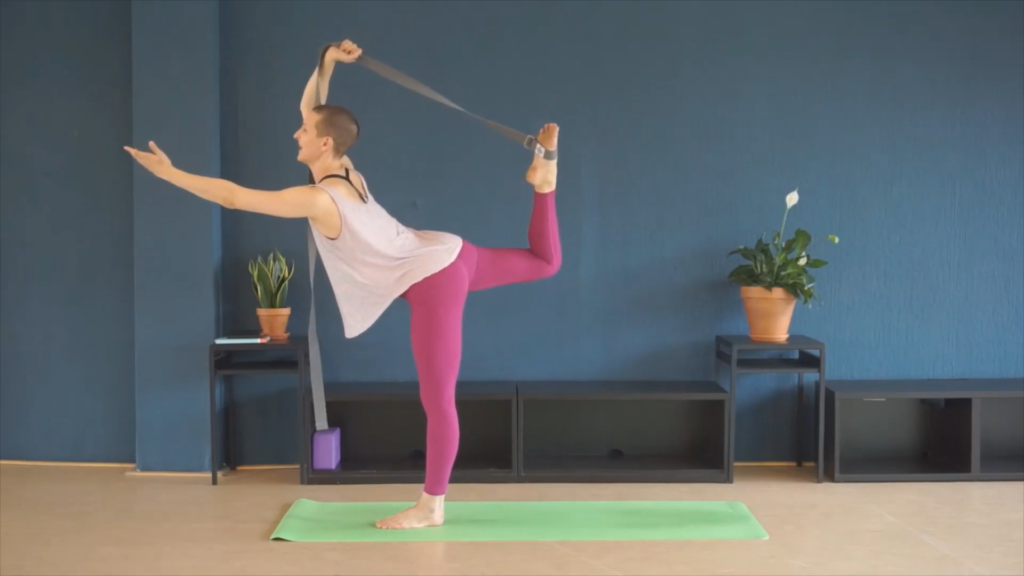
* This is not sponsored. Amazon Affiliate links potentially give me a percentage of the purchase price.

Attitudes to Time in Dance & Life: relating to and transforming conceptions of time

Time is a matter of how long the duration between two events takes to achieve itself.” (The Nikolais/Louis Dance Technique* p.176)

In “real time,” we have just had St. Patrick’s Day, are looking ahead at the end of March and Lent, and here in Cologne it is very much spring. Daylight savings has already sprung forward in North America, and shortly will here in Germany as well.

All manner of friends report that quarantining during a global pandemic has done weird things to their sense of time, and the topic is very much on our minds. How can we alter our perception of time in dance and life?

Recently in the “Roses Have Thorns” Sleeping Beauty/Hamilton/Shakespeare blog and Podcast 39, I talked about the poignant finitude of time in life given our human mortality.

In Podcast episode 44 and below, I discuss Time’s potential expansiveness, abundance, and richness, from the perspectives of yogic philosophy, as a coaching concept and as an element of dance. Next time we’ll get into more detail about musical concepts around time.

Attitudes toward Time Podcast

Time is an immensely important topic for growth, yoga, and dance, so it’s a theme I’ll return to again and again.

In awe to witness time in all its manifestations

Contrary to how we sometimes try to define time, our experience of it is NOT really linear. Some describe it as spiralic, others as only existing in this present moment. Scientists use the term “spacetime” due to the inseparability of these linked concepts. 

The Nikolais/Louis Dance Technique* book, a wonderful resource of philosophy and technique for modern dance, says: “Time is much more abstract than shape or motion. Time in its essence is invisible until it is related to something. Examples: one speed against another, repetition against sudden pauses, slow motion against fast, pendulum action in time versus out of time. Time can be absurd, surreal, and rhythmic; it can accelerate and decelerate. […] Time is closely related to space (but we don’t know how); time is like space in that it doesn’t exist until you put boundaries on it.” (p.174-175)

It’s fun to let the mind be boggled a little bit with awe at the enormity of the universe(s), to marvel at the incomprehensible complexity and beauty of nature and the nature(s) of reality through different perspectives. 

Neon green sprays of early-spring willow leaves in Cologne, Germany

The “Myths, Mirages, and Measuring Time” podcast by Rev Dr. Carl Gregg of the Unitarian Universalist Congregation of Frederick blew my mind by introducing me to the idea that time passes at different speeds, measurable by modern technology, depending on one’s elevation/relative distance from the center of the earth (affecting the speed of our rotation). 

What? My minutes pass faster on mountaintops or in an airplane than they do at sea level? Then how do clocks work exactly and how can we agree on what time it “is?” I remember learning about how measures of weight/mass are similarly problematic to standardize and having difficulty wrapping my head around those ideas too…and am glad that there are people who better understand these areas expertise to serve as engineers and the like!

Meanwhile I get to play in creative and spiritual ideas of time, such as:

Time in Yogic Philosophy

Writings on yogic philosophy have much to contribute to the conversation about time. As just one example, in his translation of the Bhagavad Gita*, Satchidanana explains how time is a matter of perspective, and that the lived experience of time helps us better see certain elements of reality: “Past, present and future are just relative. It all depends on where you stand and how you see. Space and time are unlimited. Thus, you more readily see God’s manifestation, in space and time.” (The Living Gita* p.159)

Chapter 10 of the Gita in particular contains insights on the nature of time that echo in other sources I share below: 
10:30 “Of all that measures, I am time itself.” (The Living Gita* p.157)
10:33 “I am the first letter: A. I am the combining word: “and” (dvandva). Actually I am time eternal. Thus I am the one facing all directions (Brahma). I sustain everyone as I dispense the fruits of all actions.” (The Living Gita* p.158)

“Although we say A (rhyming with bay) in English,” Satchidananda explains, “the most natural sound of the letter is ah. All you need is to open your mouth: ah, the very first letter. This is how sound begins.” (The Living Gita* p.158)

Satchidananda elaborates on the infinite nature of consciousness, and therefore also time: “Of course, words and sounds have beginnings, but there is no beginning for consciousness. Consciousness is eternal: no beginning, no end, always there. Just as the audible ah sound has a beginning. Beneath the audible is the inaudible ah sound, which you didn’t create. It’s already there. But you brought it out. […] Time also never ends or begins. Time itself is timeless and comes from the timeless one. We create so-called sections of time and call those the present, past or future. But strictly speaking there’s no past, present, or future. They are our conceptions.” (The Living Gita* p.158)

We can learn to distinguish our conceptions about time from universal truths.

Using Time to Accomplish Our Aims

James Flaherty reflects on time in Coaching: Evoking Excellence in Others*: “It’s always the case that we are fulfilling what was begun in the past by taking action in the present to bring about an outcome in the future. In a way, this may be unique to human beings; we exist simultaneously in these three openings in time.” (p.26)

On a practical level, coaching resources offer to shift our relationship to time and create a more empowering relationship with the distinction. In the ontological coaching that I do, examining and transforming our relationship to time (and all the relevant contexts we operate within) is key.

Flaherty describes the supportive structures of a time frame and network of support for coaching: “A time frame puts sufficient structure and rigor in your program so that you can have a sense of forward movement. At the outset of your program give your best estimation of how long it will take. If necessary, correct your time frame by speaking to your network of support: people who have committed themselves to your success in the program. These people will make it more difficult for you to fool yourself or endlessly postpone.”  (Coaching: Evoking Excellence in Others*, emphasis mine)

There is always a time frame associated with intended outcomes in coaching, as well as the coaching relationship itself, stated in the contract.

Indeed, in the book Coach Anyone About Anything*, the authors speak of time as the duration of play or time frame during which the payers act:  “Measurable outcomes (results) to be produced by the player and by what specific dates they are to be accomplished […] Timeframe for the coaching engagement.” (p.24) 

They also provide useful tools for coaches and “players” or clients, including the “Futurability for Objectives Checklist”  (p.30, and which I will share more about in the future) and guidance for “When Players Aren’t Taking Action” (p.70), in which they describe the “Top five reasons why players don’t take action,” which, “You may want to share this with your players because we’ve found even players themselves need to know and understand why they’re not motivated to move.” (p.70) The reasons which pertain to time are: “a. Player has no time available, b. or not enough time, c. or something isn’t worth the time investment required.” (Coach Anyone About Anything* p.71)

Coach Yourself to Success* by Talane Miedaner has a whole chapter on finding time to accomplish what is important to you, “IV. Make Time When There Isn’t Any,” and she has some great ideas for places to look to get integrity with your time, including reflective practice, time tracking, and priority-setting, such as “Take twenty minutes every morning to plan the day and reflect (Tip 35). And make a firm rule to arrive at every appointment ten minutes early.” (p.82)

Another key insight that I took away was: “Everyone complains that there isn’t enough time. We act as though time were a fixed quantity, and it isn’t. Time expands and contracts depending on what we are doing. The irony is that being overly busy makes time seem to go even faster. If you want to feel like you have more time, do less.” (Coach Yourself to Success* p.81)

Ontological Coaching Tools on Time

Of course I have a whole slew of tools about time from my training with Accomplishment Coaching. Some key distinctions that I work with in my coaching work include that time is a conversation (and as such, we decide what we want to make up about time) and that time management as an attempt to control every moment is a fallacy. What we can control is our energy and focus.

If time is defined as every moment that has ever been, is or ever will be, we see that there is plenty of time, but as with other resources available to us, we may operate in a context of abundance or scarcity. We do best to remember that satisfaction and fulfillment live in the present moment and that it is empowering to deal with time as an integrity item.

There are a variety of specific tools that I use to support clients in empowering their relationship to time and getting in integrity in this area, such as the “Context Exercise,” “Time Generator Checklist,””Top Six Checklist” and many others. I’d be happy to share these time tools with you and help you get new perspective on your time in a free 60-minute coaching session, which you can schedule by following the link here.

This concept of our being able to relate to time in different ways is connected with the topic of focus, another topic for a future blog 🙂

Describing Time in Movement and Dance

Now let’s look at how time is portrayed and described in movement. In A Primer for Movement Description*, Cecily Dell clarifies how we can describe the experience of time in dance, or “The Time Factor,” as “Changes in the quality of time in movement, becoming either sustained or quick.” Dell compares the two attitudes to time coexisting in one scene:

“Scene: gangster movie. Rich industrialist whose daughter has been kidnapped confronting mobster he knows is responsible. Where is his daughter — he wants to know now. Well . . . mobster isn’t quite sure, is stalling for time to make sure his plans have been carried out. Industrialist’s movements are punctuated with quick, nervous jerks and starts. Mobster smokes his cigar with long sustained gestures, stretching out every second as much as he can.

The dynamic in this scene consists of two opposing attitudes toward time. The two men share the same duration in their exchange; they exist and interact with the same amount of time. But the one acts from a sense of urgency, of wanting to hurry time, which the other indulges in time, as if prolonging its passage. The quality of prolonging or stretching time out, we call sustainment the quality of urgency or quickening in time we call quick. Sustained and quick are the elements or qualities of the time factor.

The qualities of sustainment and quickness differ from quantitative speed as measured by a clock, or pace or tempo as marked by a metronome. In ballet, or more extremely in Spanish dance, the legs and feet may be moving in response to very fast-paced music, while in the arms and upper body, the quality of sustainment in time may appear.” (A Primer for Movement Description Using Effort Shape and Supplementary Concepts p.24-5)

Such a vivid portrayal of these varied and relative attitudes to time!

The Nikolais-Louis approach, dancer’s time

Alwin Nikolais and Murray Louis have many relevant points regarding time in dance, so I did my best to pull out just a couple passages relevant to today’s topic. One point is time’s inseparability from other ideas: “We cannot attach time exclusively to sound or motion or space; rather, it is an integral component of all of them. Its presence cannot be eliminated. Time flows continuously, and because it has no substance we cannot alter its speed or presence. Time is relentless. It cannot be stopped. The only way to deal with time is to go with it.” (The Nikolais/Louis Dance Technique* p.178)

However we may try to box in the concept, they assert that, “There is no precise definition of time. We understand time mainly through a recurrent pattern of happenings. Natural and artificial structures exist for its measurement. In artifice, we have the clock and yard-stick. In nature, we have the rising and the setting of the sun. We have our own recurrent breath and heart-beat and the live presence of the body experiencing its existence.” (The Nikolais/Louis Dance Technique* p.178)

We move through different experiences of time, including artificially measured, sensed, and musical/rhythmic, as well as lack-of-awareness:

“Without a clock or some equivalent timepiece, time can also be determined by attention. One senses or feels the presence of time–moving fast, slow, or standing still. In dance, this awareness is abetted by musical pulse and rhythm, In addition to this awareness, the dancer can also step out of time consciousness and into a pedestrian state of unawareness.” (The Nikolais/Louis Dance Technique* p.173) So we see that time and perception are inextricably linked, such that:

“Time, for the artist, is basically a sense and perception of change. When there are no sensations or realizations of change, there is a sense of monotony and the feeling that time is passing too slowly. At the opposite pole, perception of quick change can also alter our perception of time.” (The Nikolais/Louis Dance Technique* p.178) I am so fascinated by how yogic, philosophical, pragmatic, and creative ideas about time intersect!

Coming Soon: Time & Music in Dance

I plan in my next installment to delve further into the nitty gritty of Time as an Element of Dance as it relates to music theory and ways to play with time and music in technique and choreography. In live classes we will explore manipulating time, as well as recorded classes online, so we can relate theory to practical experiences in movement.

Stay tuned on my YouTube Channel and Blog for more about the Element of Time and many more related topics!

What is the conversation that you have with time?

Blythe Stephens, MFA
she/her or they/them
A Blythe Coach: Dance Education & Coaching 
move through life with balance, grace, & power
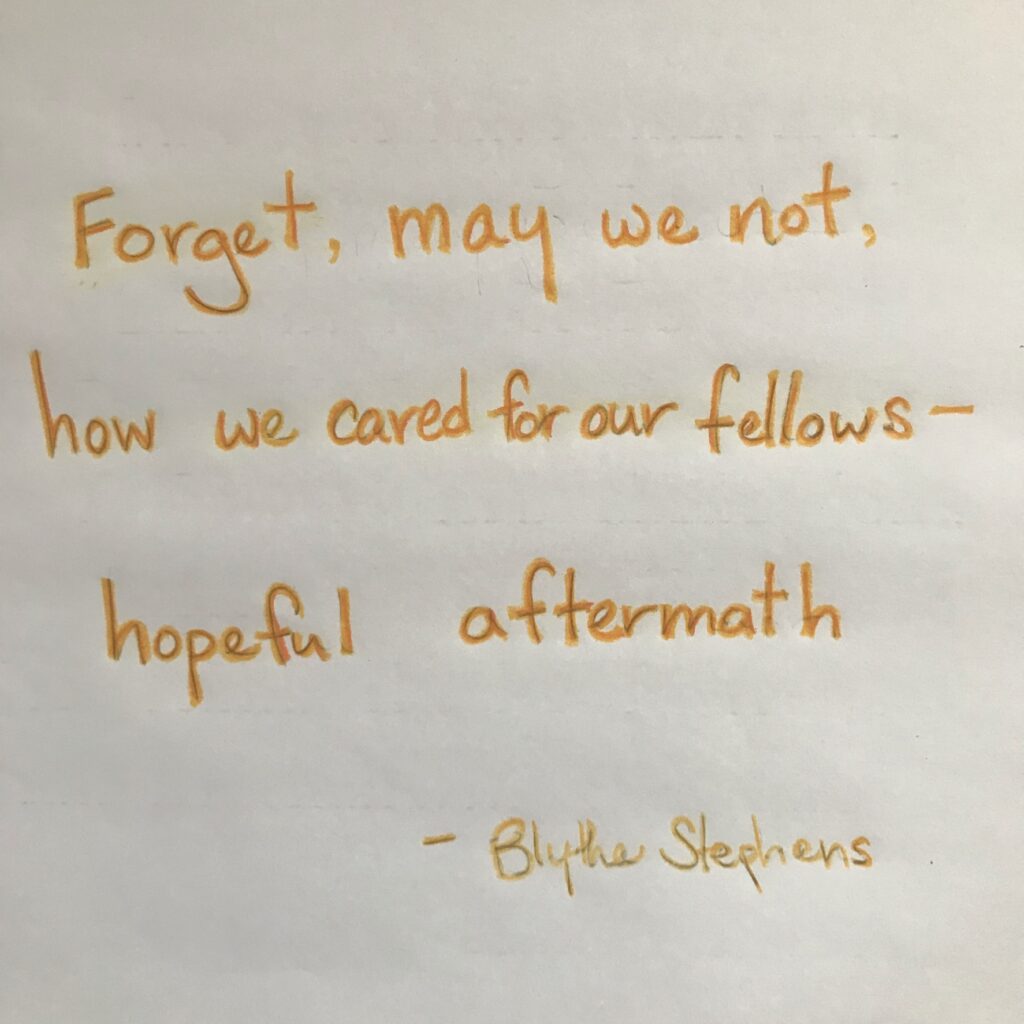
*This blog is not sponsored. Amazon Affiliate links potentially give me a percentage of the purchase price.

WordPress Cookie Notice by Real Cookie Banner